Get Full Government Meeting Transcripts, Videos, & Alerts Forever!
Get email alerts on the Family Engagement topic
No spam. Unsubscribe anytime.
San Bernardino district showcases family‑engagement strategy, surveys and programs that officials say boost student outcomes
Summary
District leaders presented a yearly Family Engagement report showing 32.6% Panorama survey participation, 6,118 Family University attendees and links between parent workshops and student assessment gains; officials emphasized SPAC parent input and community schools work.
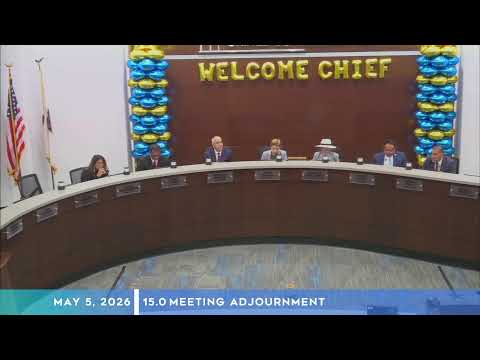
San Bernardino City Unified School District staff on May 5 presented a comprehensive family‑engagement report that district leaders said ties parent participation to improved student outcomes.
Assistant Superintendent Dr. Sandra Rodriguez and Beatrice Gonzalez, the district’s director of family and community engagement, outlined four measurable areas: family perception (Panorama survey), participation and impact (a live engagement dashboard), volunteer tracking (Raptor) and qualitative input from the Superintendent Parent Advisory Council (SPAC).
Gina Perez described the Panorama family survey results: a 32.6% participation rate in 2026 on items such as customer service and Title I instructional programs. ‘‘Our families are showing up when we say, ‘We want to hear from you,’ ’’ Perez said. The district noted small but steady increases in favorable responses over prior years.
Family engagement manager Victor Hernandez reviewed the district’s Family University and workshops: 6,118 participants overall and 2,601 in digital literacy courses. Hernandez said the district links registered parent attendees to students via student IDs and analytics so staff can observe correlated gains on NWEA MAP and state assessments.
Presenters described a tiered approach: broad, districtwide workshops (tier 1) and more academically aligned, frequent workshops (tier 2) that showed notable gains for students whose families participated regularly. ‘‘We are one of the first districts to directly connect family engagement to student academic outcomes,’’ Hernandez said.
Direct parent input through SPAC surfaced items the district moved to address, including improvements to the district Welcome Center; parents subsequently created a brief feedback postcard and a digital QR feedback option for visitors.
The presentation also updated six California Community Schools Partnership sites funded by the state grant; Norton Elementary was highlighted as the state’s top Green Ribbon school and Pacific and Sierra high schools were cited for exemplary pathway work.
Board members and parents exchanged questions on survey timing, disaggregated response rates and access for single parents. Gonzalez said district staff will disaggregate Panorama responses by site and grade and explore moving the survey window to align with parent‑teacher conferences to raise participation.
The district said it will post parent guides (English and Spanish) in August on the student portal and make workshop recordings available where feasible. Officials framed the effort as building parent capacity and creating ‘‘equal partners’’ between families and school staff.
The presentation concluded with staff and parent leaders describing SPAC as a consistent venue for ‘‘street data’’—qualitative feedback that has driven immediate facility and service changes, the presenters said.