Get Full Government Meeting Transcripts, Videos, & Alerts Forever!
Get email alerts on the Un Eu Cooperation topic
No spam. Unsubscribe anytime.
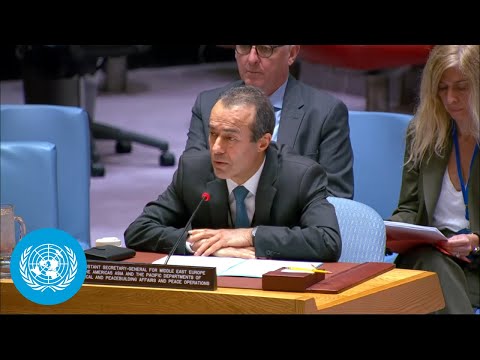
Presenter urges deeper U.N.‑EU cooperation and calls for immediate ceasefire in Ukraine
Summary
A presenter briefing the Council on United Nations–European Union cooperation urged an immediate, full and unconditional ceasefire in Ukraine and outlined joint priorities for 2025–2028, citing operational partnerships in peace operations, peacebuilding and regional crisis response.
The presenter briefing the Council on United Nations–European Union cooperation urged an "immediate, full, and unconditional ceasefire" in Ukraine and outlined joint priorities for 2025–2028, saying deeper operational cooperation between the U.N. and the European Union is essential to advance peace, protection and stability.
The presenter emphasized the EU’s evolution from a post–Second World War project of integration into a major economic and diplomatic actor with a global presence, including delegations in New York. "The European Union conceived it as a project of peace, integration, and cooperation," the presenter said, and added that the EU’s founding treaties "underscore the commitment to multilateral solutions, particularly in the framework of the United Nations."
The briefing invoked Chapter VIII of the United Nations Charter to underline the norm of cooperation with regional organizations, saying the U.N. "continues to work closely with regional and subregional organizations, including those with a global reach such as the European Union." The presenter named several operational contexts in which the two bodies coordinate, including Lebanon, Afghanistan (the Doha process), the wider Middle East, Sudan, the Great Lakes region and Libya.
The presenter highlighted joint action in specific regional tracks: implementing the U.N. Global Counter‑Terrorism Strategy in Central Asia; advancing reconciliation in the Western Balkans; and co‑chairing the Geneva International Discussions on Georgia in the South Caucasus with the EU and OSCE. He also said trilateral engagement with the African Union has helped advance more predictable, sustainable approaches to peace support in Africa consistent with AU leadership.
On deployed operations, the presenter listed contexts where EU missions operate alongside U.N. presences — naming the Central African Republic, Somalia, Kosovo, Israel and the occupied Palestinian territory, and Libya — and pointed to Council‑mandated EU operations such as EUFOR Althea in Bosnia and Herzegovina and EUNAVFOR MED Irini related to Libya.
The briefing outlined a set of shared priorities negotiated between the U.N. Secretariat (Department of Political and Peacebuilding Affairs and Peace Operations) and the European External Action Service for 2025–2028. Those priorities, the presenter said, aim to strengthen political and operational support for U.N. peace operations; advance cooperation on peacebuilding, mediation and conflict prevention; deepen engagement with regional actors; and advance shared objectives on climate and security, rule of law, protection of civilians, counter‑terrorism, security sector reform, disarmament and innovation.
The presenter stressed women's participation in peace processes, noting the EU has joined the Secretary‑General's common pledges for "women's full, equal, and meaningful participation in peace processes" and framed that commitment as central to advancing inclusive political processes.
Closing the briefing, the presenter referenced the adoption of the Pact for the Future as reaffirming the U.N.'s centrality and said he looked forward to continued cooperation with the European Union. He then thanked "Mr. Khiari" for his briefing and yielded the floor to another speaker.
The briefing contained no formal motions or votes recorded in the transcript.