Get Full Government Meeting Transcripts, Videos, & Alerts Forever!
Get email alerts on the Sudan Humanitarian Crisis topic
No spam. Unsubscribe anytime.
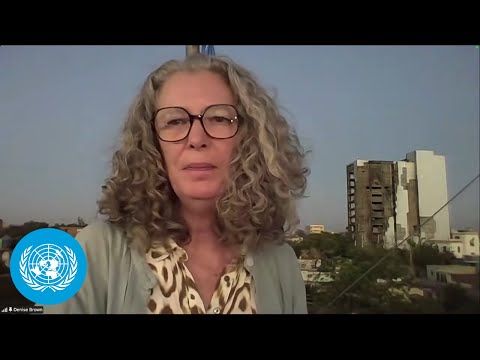
UN humanitarian coordinator Denise Brown warns of repeated atrocities, funding shortfall in Sudan
Summary
At a U.N. press briefing marking the third year of fighting in Sudan, Denise Brown described recurring sexual violence, mass atrocities and major access barriers for aid convoys, and said the U.N. 2026 appeal for Sudan is $2.9 billion and only 16% funded so far.
Denise Brown, the United Nations humanitarian coordinator and resident coordinator for Sudan, told a U.N. press briefing that the conflict in Sudan has entered its third year with “repeats of sexual violence, repeated displacement, repeated deaths,” and that humanitarian teams are "picking up the pieces" but are not the solution.
Brown cited findings from the U.N. Office of the High Commissioner for Human Rights and recent field reporting to describe a pattern of systematic sexual violence in Darfur and elsewhere. "Rape and gang rape," she said, noting that Médecins Sans Frontières' recent Darfur report found that its teams treated close to 2,500 survivors of sexual violence over the past year.
She also referenced what she called mass atrocities around El Fasher, saying OHCHR was able to verify about 6,000 people killed in three days and that "we actually believe the number is much higher," and said the U.N. Independent Fact‑Finding Mission for Sudan now refers to "the hallmarks of genocide."
Brown urged U.N. member states to focus on prevention by addressing the "war economy" and the flow of weapons that sustain the fighting. "Prevention is the key here," she said, and added that the humanitarian community can only provide relief while political and security remedies are needed to stop the violence.
On access, Brown described Dilling as "under daily attacks" and said convoys that briefly arrived in recent weeks are no longer able to get in; she said civilians she met in March are trying to flee but lack safe passage. She said she will visit the Blue Nile this week, where she said close to 30,000 people have been displaced.
Brown gave funding figures for U.N. appeals: "We were 35% funded in 2025. And now in 2026, we need 2.9 billion dollars and that's really hyper prioritized. We are 16% funded." She warned that partial funding limits what aid can accomplish and appealed to donors not to treat Sudan as a "forgotten crisis," saying instead she regarded it as an "abandoned crisis."
During a question-and-answer period, reporters pressed Brown on accountability and the prospect of ending the conflict. Ibtisam Azam of Al Arabi asked what prevention and accountability should look like; Brown said those are matters for member states to act on, emphasizing the need to identify and halt the resources fueling the war, including arms flows and any lapses in enforcing embargoes.
Ephrem Cosifie of Arab News Daily asked what areas most need aid after convoys briefly reached Dilling; Brown replied that access remains fragile because attacks resumed, that she will travel to El Obeid in coming days to pursue access efforts, and that the Secretary‑General's special envoy has been engaging parties — including meeting an RSF leader — but that the envoy would need to answer detailed questions about tangible effects on the ground.
A representative of the United Nations Correspondents Association asked about prospects for ending the fighting; Brown said she sees no sign of slowing in the systematic sexual violence or the mass atrocities documented to date and said community‑level peace initiatives offer the most immediate avenue for progress, which the U.N. plans to support alongside global diplomatic efforts.
The briefing closed with the moderator thanking Brown and noting that U.N. spokesperson Stephane Dujarric would provide the next briefing.