Get Full Government Meeting Transcripts, Videos, & Alerts Forever!
Get email alerts on the Freedom Of Access And Board Procedures topic
No spam. Unsubscribe anytime.
Planning board staff brief members on Maine open‑meetings rules, ex parte limits and conflict rules
Summary
At a special Auburn Planning Board training, the city clerk and city attorney reviewed Maine’s Freedom of Access Act, rules on executive sessions, remote participation, ex parte communications, conflicts of interest, and how to prepare findings of fact; the board also filled a representative seat on the comprehensive plan committee by voice vote (tally not specified).
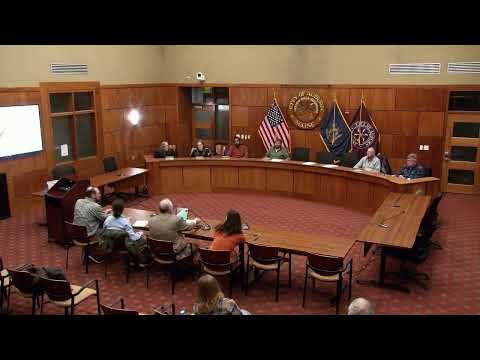
The Auburn Planning Board met in special session for training on Maine’s Freedom of Access Act (FOA) and planning‑board procedures, with City Clerk Emily leading an overview of public‑meeting and records obligations and City Attorney Dan Stockford explaining legal limits on deliberation, ex parte contacts and conflicts of interest.
“The Freedom of Access Act is the right to know law,” Emily said, noting FOA covers two main areas — public proceedings and public records — and that the city charter calls for public notice at least two business days before meetings. She reminded members that records created on personal devices or by email about city business are subject to FOA and that the public access officer must acknowledge requests within five business days; staff said large searches may incur fees (staff cited $25 an hour for work over two hours).
Dan Stockford told the board that when it decides an application it acts in a quasi‑judicial role and must afford due process to applicants. “When you’re judging an application, you are acting in a quasi judicial capacity,” Stockford said, stressing that board members should base decisions on information presented to the full board rather than on independent research or undisclosed private site visits.
Board members raised practical questions about drive‑by observations, aerial imagery and expert testimony. Stockford recommended disclosing any personal observations on the record or arranging a properly noticed site visit so information becomes part of the public record; he also said the board can use meeting tools (for example, EagleView or Google Street View) during a public proceeding to allow all parties to view the same materials.
On public comment, Stockford advised the board to focus deliberations on the specific ordinance standards that apply to an application. He noted that the planning board can modify time limits (for example, to accommodate expert witnesses) or vote to suspend its rules on a case‑by‑case basis when fairness requires it.
Stockford reviewed conflict‑of‑interest standards: Maine law requires recusal when a member owns at least 10% of an entity before the board; Auburn’s local ethics ordinance, he said, is broader and discourages participation where a reasonable person might perceive impaired impartiality. He outlined a three‑step approach: evaluate potential conflicts, disclose them publicly, and allow the board to vote on recusal if necessary.
The attorney emphasized the importance of written findings of fact and conclusions of law for each application, explaining courts frequently vacate decisions that lack adequate written rationale. He recommended several approaches — staff‑drafted findings, fill‑in templates, or deferring adoption to a subsequent meeting when the board cannot prepare comprehensive findings on the spot.
Toward the end of the meeting the board solicited volunteers to serve as acting chair for the next meeting and to fill a Planning Board seat on the comprehensive plan committee. One member volunteered and the board took a voice vote in favor (tally not specified). Members then moved and seconded to adjourn.
The training focused on practical steps the Planning Board can take to reduce legal risk — use city email for board business, avoid substantive group e‑mail exchanges, disclose independent information on the record, notice site visits properly, and adopt clear procedures for public testimony and findings — all steps Stockford and staff said help protect both the public’s access rights and the board’s decisions from legal challenge.