Get Full Government Meeting Transcripts, Videos, & Alerts Forever!
Get email alerts on the School Budget topic
No spam. Unsubscribe anytime.
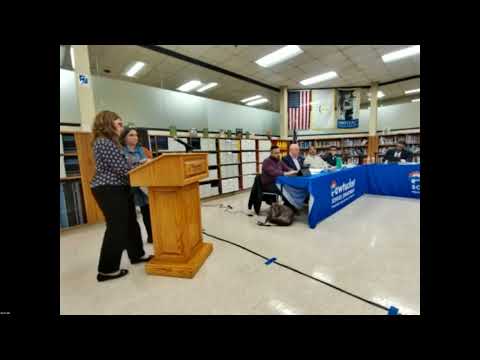
Pawtucket school committee fails first passage of proposed FY27 budget after heated debate over staffing cuts
Summary
The Pawtucket School Committee on a failed first reading of the FY27 budget after a presentation showing a $7.4 million gap and public testimony from educators who said converting 12‑month roles to 10 months would jeopardize summer programs and special education compliance.
The Pawtucket School Committee failed to pass the first reading of the proposed fiscal 2027 budget after more than two hours of public testimony and committee questions about staffing changes and a projected $7.4 million gap.
Educators, coordinators and nonprofit leaders told the committee that moving several 12‑month positions to 10 months would undermine summer programs and legally required work. "When school budgets are cut, students don't just lose services, they lose access to learning," a public commenter identified in the record as Mr. Boe said. "Fewer teachers means larger class sizes. Larger class sizes mean less attention, less support, less learning."
Why it matters: Consultants presented a budget picture driven by declining enrollment (about 865 fewer students, roughly 10% since FY22), $6 million in required new spending (including an estimated $4.3 million for contractual pay increases, $1 million for a new science curriculum and $700,000 for technology), and the loss of one‑time funds that were used in FY26. Using the governor's proposed state aid figure, consultants said revenue changes — including a net $1.5 million reduction when compared with FY26 recurring sources — and the new spending produced a $7.4 million shortfall.
Public testimony and reaction: Dozens of employees and community partners described concrete summer duties tied to current 12‑month roles. Melissa Labasier, who identified herself as the district's talent development coordinator and a 30‑year Pawtucket educator, said she was told her role would change from 12 to 10 months and that the summer work she performs supports teacher recruitment, mentor programs and RIDE‑required professional learning. District special education coordinators Kelly Carr and Christina McCormack said summer responsibilities — including Extended School Year (ESY) programming, evaluations and Safety Care training — are required to meet Individuals with Disabilities Education Act (IDEA) and Rhode Island Department of Education (RIDE) timelines and that eliminating summer coverage would directly affect roughly 120 students who require intensive services.
Superintendent Buck and consultant Noah Wetman (Alvarez and Marsol) defended the recommended reductions as part of a multi‑year plan intended to minimize school‑level damage while confronting an unsustainable gap. Wetman outlined $1.7 million in proposed central‑office savings (including limiting some positions and moving some roles from 12 to 10 months), about $600,000 in non‑personnel central reductions (noting $440,000 tied to transportation routing opportunities), and roughly $4.7 million in school‑level personnel reductions that include eliminating itinerant positions, five assistant principal roles and 13 elementary positions (six of the school positions listed were vacant in the presentation).
Points of contention: Committee members pressed for specificity on several items that were material to whether the personnel changes would actually save money: how many of the roles flagged for 12→10 month changes are fully grant‑funded versus locally funded (consultants said most were split funded; one presenter indicated she believed her position was wholly grant‑funded), estimates of stipends to cover essential summer work if roles are paid hourly rather than salaried, and the exact savings that would result from staff reductions versus month‑length changes. Committee members also debated whether the committee should have asked the mayor and city council for a larger appropriation, with several members urging a bigger initial ask to reduce proposed cuts.
Vote and next steps: A motion to approve first passage of the FY27 budget was made by Mr. Jim Chal and seconded by Mr. Omar Reyes. The clerk called the roll; the meeting record states "33 fails" and does not capture a full roll‑call tally in the transcript. The committee scheduled additional meetings for follow up (a session on the 24th and the clerk was asked to seek availability for the 31st, the last day to submit the budget), and members directed staff to return with more granular savings estimates, stipend scenarios, and confirmation of grant‑funding splits.
What comes next: The superintendent and finance team will return with requested clarifications (stipend cost estimates, the exact local share of affected positions, and updated projections if mayoral or state aid commitments change). The committee may amend its ask to the city or revise reductions before a second passage and final appropriation by the mayor and city council.
Representative quotes: "My child is learning English and trying to keep up ... In a bigger class, they disappear," Daniel Silva, multilingual learners coordinator, said of the impact of larger classes on emergent bilingual students. "While we have difficult decisions to make bringing down this seven‑plus million dollar deficit, the work still needs to be done," the superintendent said, describing options such as stipend‑based summer pay for some duties.
The committee adjourned after instructing staff to provide the additional information and scheduling follow‑up sessions to allow members to consider amendments before final submission to municipal and state appropriators.