Get Full Government Meeting Transcripts, Videos, & Alerts Forever!
Get email alerts on the Electrification Regulation And Incentives topic
No spam. Unsubscribe anytime.
Bay Area rule will require zero‑NOx residential water heaters from 2027; contractors urged to plan for electrification
Summary
MCE and a regional supplier told Richmond contractors that Bay Area Air District Regulation 9 Rule 6 will require zero‑NOx residential water heaters 75,000 BTU and below starting Jan. 1, 2027, and outlined incentives, trainings and contractor supports to ease the transition.
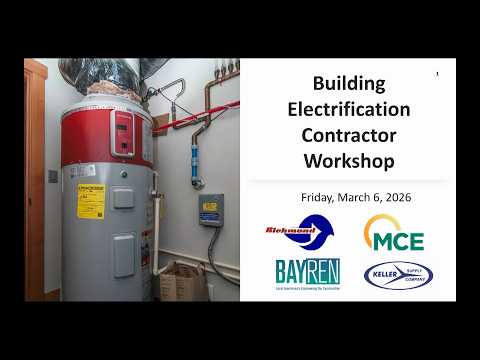
Robert Green, a representative of Keller Supply Company, told contractors that Bay Area Air District Regulation 9 Rule 6 will require residential water heaters and heating equipment rated 75,000 BTU and below to meet zero‑NOx standards beginning Jan. 1, 2027. "Zero NOx means ... electric or heat pumps will be the only water heating equipment that will be allowed to be installed in the air management district's territories," Robert Green said, urging contractors to prepare customers and plan for panel and conversion work.
Why this matters: the rule affects equipment sales and installations across the Bay Area and shifts many replacement and new‑installation projects toward electric heat pumps and other zero‑NOx technologies. Suppliers and contractors will need training, planning time and, for some projects, electrical upgrades to accommodate electric systems.
State and regional context: Javad Montaro, customer programs manager for workforce development at MCE, said state policy and regional programs are driving adoption of all‑electric technologies; the speaker cited a target to install about six million heat pumps by 2030 and said MCE aims to reduce permitting friction and support workforce development for that transition.
Contractor supports and incentives: MCE staff highlighted several programs intended to help contractors and customers make the transition. The residential flex‑market program offers upfront rebates and performance payments tied to meter‑measured savings; MCE staff said a temporary $4,000 heat‑pump‑water‑heater incentive (while funds last) can help close sales on heat‑pump water‑heater jobs. MCE’s Green Workforce Pathways program can provide stipends to employers for training: the speaker described a $3,500 per‑employee stipend that can cover three employees to attend heat‑pump training.
Training and market access: MCE also promotes a contractor finder tool to connect trained installers with customers across four service counties. The speaker encouraged contractors to participate in MCE trainings and to register for programs that can bring customers and performance payments to qualifying projects.
BayREN programs and rebates: Damian Hardman Sana, with Contra Costa County and the Bay Area Regional Energy Network (BayREN), described BayREN offerings contractors can use to expand business: a Home Energy Score assessor network (being expanded statewide), a multifamily enhancement rebate with a $500 base rebate (eligibility generally requires installing two or more measures that together reduce building energy use by at least 10%) and a refrigerant‑replacement incentive that can cover up to 80% of project cost for qualifying replacements. Damian said the BayREN business pay‑for‑performance program is active again for 2026 and encouraged contractors to sign up for participating contractor status.
What contractors should do next: suppliers and MCE presenters urged contractors to start training staff, review product availability and engage customers now to schedule conversions ahead of the January 2027 compliance date. Robert Green offered supplier contacts for equipment questions and recommended early planning for emergency replacements that will be more complex under the new rule.