Get Full Government Meeting Transcripts, Videos, & Alerts Forever!
Get email alerts on the Public Health Workforce topic
No spam. Unsubscribe anytime.
CDC‑supported training credited with creating regional disease‑investigators network
Summary
A multilingual training video says the U.S. Centers for Disease Control and Prevention has supported public‑health workforce training in Georgia and the surrounding region since 2009; speakers say a Field Training Program helped form a network of disease investigators to improve outbreak detection and response.
A multilingual training video produced for public‑health audiences says the U.S. Centers for Disease Control and Prevention has supported public‑health workforce training in Georgia and the surrounding region since 2009, and that a Field Training Program (FTP) helped create a network of disease investigators aimed at improving outbreak detection and response.
The recording, voiced in Georgian, Ukrainian and Armenian, frames workforce development as a core element of preparedness. Narrator (Georgian) states that “strong human resources in public health are essential for preventing and responding to crises” and points to CDC support for training beginning in 2009.
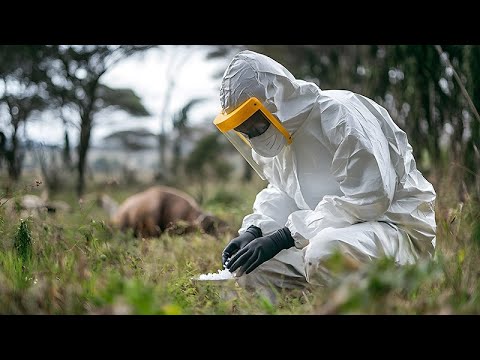
Speakers who describe their experience with the Field Training Program say the curriculum covered practical skills. Speaker (Ukrainian) said the program taught planning research, data analysis and risk communication that transformed day‑to‑day work. An Armenian speaker said methods learned in epidemiology courses at Yerevan State Medical University were successfully integrated into teaching and practical training.
The recording links those training activities to the formation of a regional network of disease investigators. According to the video, the network allows participants to share experiences, professional knowledge and cultural connections to study threats, assess risks and identify barriers more deeply—efforts described as intended to help save lives and strengthen response to critical situations.
No formal funding amounts, specific program dates beyond the 2009 start of CDC support, or named FTP alumni are given in the recording. The video emphasizes skills and cooperation across countries rather than specific policy changes or formal commitments.
The training video does not record questions, votes or formal decisions; it presents the FTP and the resulting network as capacity‑building efforts supported by the CDC and adopted in academic and field practice in the region.