Get Full Government Meeting Transcripts, Videos, & Alerts Forever!
Get email alerts on the Parks And Recreation Plan topic
No spam. Unsubscribe anytime.
Mountain View commission forwards parks and recreation strategic plan to council after heated public debate over funding, equity and native plantings
Summary
After a half‑day of public comment and commissioner questions, staff presented an updated Parks and Recreation Strategic Plan and the commission voted to forward the draft to City Council, asking staff to prioritize acquisitions in park‑poor neighborhoods and to implement short‑term, citywide improvements with an emphasis on native plantings and canopy trees.
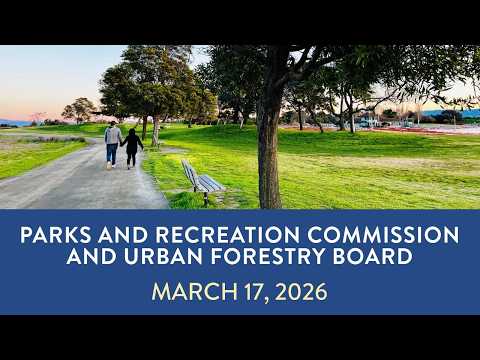
Mountain View’s Parks and Recreation Commission voted on March 17 to forward an updated Parks and Recreation Strategic Plan to City Council while attaching instructions that staff prioritize acquisitions and near‑term improvements for neighborhoods with the greatest park deficits.
Staff presented the plan at the meeting and recommended the commission send the draft to council for adoption after final formatting and graphic design. Christine Crosby, Assistant Community Services Director, told commissioners the updated draft adds a biodiversity goal, reallocates approximately 34 acres of trail corridor across five planning areas and estimates a current shortfall of about 53.5 acres (excluding North Bayshore), translating to roughly $722 million in acquisition, design and construction costs at today’s estimates. "Staff is recommending that the Parks and Recreation Commission forward a recommendation to City Council to adopt the Parks and Recreation Strategic Plan," Crosby said.
Why it matters: residents said the plan identifies a large unmet need but lacks a clear roadmap for how to pay for or deliver projects that will actually close gaps in park access. More than a dozen residents urged the commission to secure firm funding commitments and to ensure parks in the most underserved planning areas receive priority. Many speakers pressed for stronger biodiversity protections, for native plantings and for limits on artificial turf and plasticized playground surfacing.
What was said: long‑time resident Bill Lambert urged more specific timelines and financial commitments, saying the plan risks repeating an earlier, aspirational document that delivered little. "Three acres for a thousand residents sounds wonderful, but really that's a promise I don't think the city can really keep," Lambert said. Conservation and neighborhood groups supported the addition of biodiversity goals but asked for sharper metrics and faster action on tree canopy and accessible restrooms.
Commission debate and direction: commissioners praised the revisions but split on whether to delay action until the city’s nexus study and Measure G allocations produce clearer funding numbers. Some commissioners argued the commission should insist on an attached funding strategy or a set of prioritized capital projects for council consideration. Others said delaying would slow implementation of changes residents asked for now, such as additional tree plantings, improved walking and biking access and modest park upgrades.
The motion: after discussion, the commission voted to forward the plan to City Council with two attached directions: (1) prioritize park expansion and improvements in planning areas that are underserved, taking into account park acreage per 1,000 residents, reliance on school fields and 10‑minute walking access; and (2) identify and implement near‑term, low‑cost improvements citywide with a focus on adding tree canopy and native landscaping while Council and staff complete the financial/policy work that will underwrite larger acquisitions and major park projects. The motion passed in the meeting's recorded vote.
What happens next: staff said the plan will be formatted for publication and return to City Council on May 26 for adoption and that annual reporting and an online dashboard will track progress and milestones. Commissioners and multiple community members urged the council to prioritize a funding strategy and to formally list the capital projects that would be funded under different scenarios (Measure G, potential bond measures, developer fees), a step staff said they can support in a separate financing or funding strategy document.
Context: the plan’s updates reflect public and council feedback received during prior reviews in November and at a January study session. Key additions include a formal biodiversity goal, redistributed trail corridor acreage to better reflect where corridors actually run across planning areas, and two new action items expanding learn‑to‑swim opportunities and improving inclusion/accessibility in parks.
The meeting adjourned after the strategic plan item and several other agenda items. The commission will continue to monitor the plan’s implementation and will receive annual progress reports and dashboard data from staff.