Get Full Government Meeting Transcripts, Videos, & Alerts Forever!
Get email alerts on the Probate Budget topic
No spam. Unsubscribe anytime.
Columbus probate judge wins extra funding after citing major reductions in jail, arrest and hospital days from assisted‑outpatient program
Summary
Probate Judge De Antonio asked council for about $19,655 in additional operating funds for FY26, citing attorney and guardian ad litem costs and data showing a large drop in jail days, arrests and hospital bed days among assisted‑outpatient treatment participants; council approved the request.
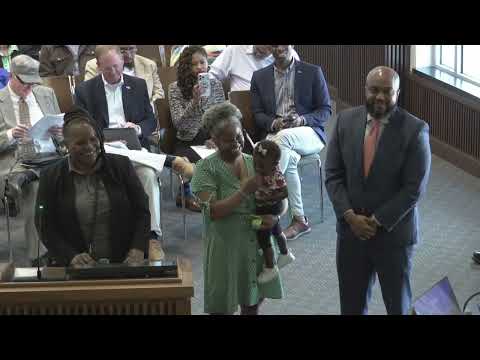
Probate Judge De Antonio asked Columbus City Council on March 24 to increase his FY26 operating budget to cover rising attorney and guardian ad litem fees and other operating costs. He requested an immediate adjustment of roughly $19,655 and said he planned a slightly smaller ask for the FY27 adopted budget.
De Antonio told the council the probate court's expanded assisted outpatient treatment (AOT) program — aimed at people with severe mental illness who do not recognize their condition — had produced measurable savings and service impacts. Citing data collected by the Department of Behavioral Health and Developmental Disabilities and analyzed by Georgia State University, he said participants in his program saw a 76.4% decrease in jail days, a 42.9% decrease in arrests and an 84.9% decrease in psychiatric hospital bed days over a multi‑year period. The judge said program success has required appointing attorneys and guardians at litem in complex cases and that those services are driving his operating cost increases.
Councilors asked where the funds would come from; the cost for the immediate request was covered from the city's reserves, council was told. Members thanked the judge for describing the program's community benefits and voted to approve the request during the meeting.
What was decided: The council approved the judge's FY26 funding request. Council members also discussed arranging a future briefing with behavioral‑health partners and public‑safety staff to explore coordination and longer‑term funding implications.