Get Full Government Meeting Transcripts, Videos, & Alerts Forever!
Get email alerts on the Housing Shelter topic
No spam. Unsubscribe anytime.
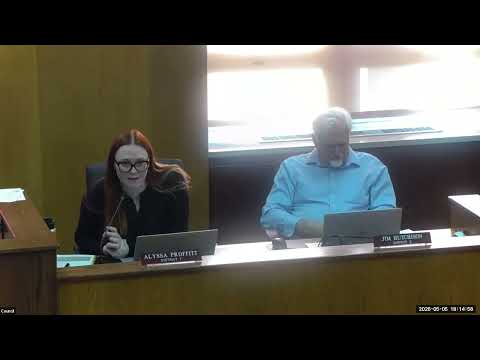
Council approves conditional-use permit for 828 Cherry Street sober-living home amid neighborhood concerns
Summary
The council approved a conditional-use permit allowing a sober-living rooming house at 828 Cherry Street with a maximum capacity of 20 residents and on-site management; neighbors pressed for clearer manager qualifications and safeguards.
The Green Bay Common Council approved a conditional-use permit for a sober-living rooming house at 828 Cherry Street after hearing neighborhood concerns about capacity, management and potential nuisance impacts.
An adjacent neighbor, Kevin Clotty, told the council he had been told the facility would house a maximum of 20 men and asked whether there would be 24-hour on-site management and a privacy barrier between properties. The applicant, David Nelson, confirmed a cap of 20 residents and said the project team will install privacy fencing and buffering and that a resident house manager and backup assistant manager will be provided.
Lamont "Monte" Jensen, who identified himself as the executive director of the operating organization, said managers will be people in long-term recovery and that he is certified as a recovery coach; he emphasized the operation is not a treatment program but a supervised sober-living facility. He said the manager and assistant manager roles would be filled before the facility opens.
City staff reviewed inspection and nuisance-complaint records for congregate living properties over approximately eight years and reported that about half of 16 similar facilities had no complaints and that the remainder had largely maintenance-related issues. Staff advised that conditional-use approvals must comply with the Green Bay Municipal Code and that revocation of a conditional-use permit is an available remedy if the property becomes a nuisance. Staff also noted that while 20 is the listed maximum capacity in the application, practical site limits (parking and layout) could make 18 the realistic maximum on site.
Council members stressed the importance of neighborhood outreach and a contact point for residents. Several members said they had attended a neighborhood input meeting and found many questions were addressed there. After debate, the council approved the conditional-use permit by voice vote; the transcript does not record a roll-call tally for the item.