Get Full Government Meeting Transcripts, Videos, & Alerts Forever!
Get email alerts on the School Financing topic
No spam. Unsubscribe anytime.
Advisers warn Pawtucket of near-term tax pressure from new high school financing
Summary
Municipal advisers told the Pawtucket School Committee that carrying construction financing for the $300+ million unified high school will fall mainly on the city until state reimbursement begins, potentially raising property-tax levy needs in FY27—and FY28 unless borrowing is phased or cash-managed.
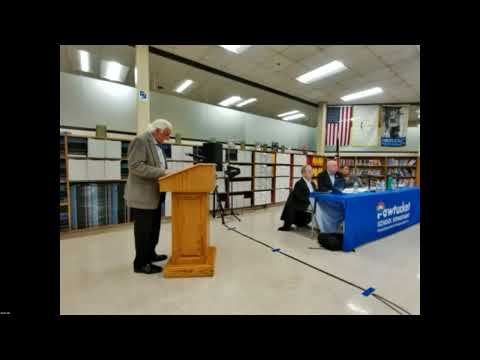
PFM municipal adviser Sai Kamy Vorvong told the Pawtucket School Committee on March 24 that the city will carry most of the construction-financing costs for the new unified high school until state reimbursement begins after project completion.
Vorvong said the high school project exceeds $300 million and is among the largest school builds in the state. Under a traditional financing approach, the district's model shows incremental interim debt-service costs of roughly $6 million in fiscal 2027 and $7.5 million in fiscal 2028 — amounts that, if covered entirely by local property tax, would equal several percentage points on the levy.
The adviser said the district can limit that near-term levy pressure by using shorter-term bond anticipation notes, staging smaller borrowings, capitalizing interest in the early draw periods and tightly coordinating draws with anticipated RIDE (Rhode Island Department of Education) reimbursements. He cautioned that frequent, high-volume borrowing draws market attention and said close cooperation between the school committee, city and state is critical to preserve favorable borrowing terms.
Committee members pressed Vorvong on assumptions in the model, including the assumed reimbursement rate and whether 20- or 30-year amortizations were preferable. Vorvong said his model used a conservative reimbursement assumption in the low 80% range for base housing aid and noted bonuses could lift the rate into the low 90s; he emphasized that bonus payments also flow after project completion.
Janine Borski, speaking from the finance team, clarified that state reimbursements are applied to debt service schedules and are smoothed over the amortization period rather than paid as a single lump sum. Vorvong and other advisers recommended careful cash-flow management and smaller, more frequent borrowings to avoid carrying interest on large sums that are not yet spent.
Next steps include continuing coordination with the mayor's office and the city council, refining bond-timing scenarios and presenting updated models as construction draws and state determinations evolve.
The committee did not take a formal vote on financing strategy during the March 24 meeting; the presentation was an informational briefing to inform upcoming budget and borrowing decisions.