Get Full Government Meeting Transcripts, Videos, & Alerts Forever!
Get email alerts on the Historic Preservation topic
No spam. Unsubscribe anytime.
Historian Bill Seagars recounts 13 South Carolina churches burned during the American Revolution
Summary
At a Lancaster County Cultural Arts Center lecture, author and preservationist Bill Seagars described 13 South Carolina churches burned in the Revolution, offered architectural and historical context, and highlighted recent reinterment work at the Camden meeting‑house site.
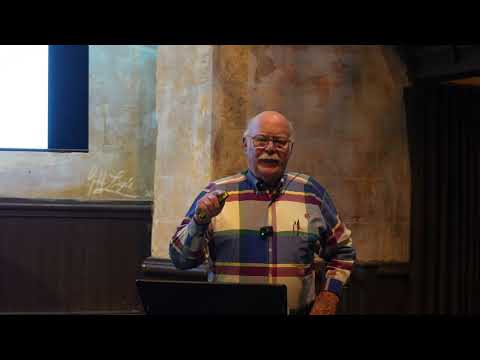
At a talk at the Lancaster County Cultural Arts Center, author and preservationist Bill Seagars recounted how 13 churches across South Carolina were burned during the American Revolution and described the architecture and local histories that have helped some sites survive in ruin.
Seagars, who said he has spent more than 20 years locating and documenting colonial and antebellum church buildings, told attendees that some churches were targeted for military reasons — to destroy munitions or deny shelter — while others were burned as punitive acts against clergy and congregations whose loyalties were suspect. “Some were burned militarily, some were burned for beliefs, religion, some were just burned out of just pure hatred,” Seagars said.
Why it matters: the lecture tied local preservation to broader Revolutionary‑era politics and to ongoing efforts to map, protect and interpret scattered historic sites. Seagars said documenting locations — including GPS coordinates included in his book — helps researchers and visitors find places that lack modern addresses.
Seagars used several churches to illustrate different causes and architectural survivors. He described the Sheldon Church (mid‑18th century), which he said British troops burned in 1779 after a local loyalist reported that patriots had stored gunpowder there. “They decided it would best to get back at the Bull family and to destroy this ammunition,” Seagars said, describing why the brick exterior walls remain while the wooden interiors were destroyed.
He also described a “Brickyard” or Big Church in Monk’s Corner (1755) that British forces burned after using it to store extra ammunition, and Prince George Church near Georgetown, which Seagars said served as stables for occupying troops and was burned in 1781 before later reconstruction work in the early 19th century.
Seagars explained masonry techniques — including 24‑inch load‑bearing brick walls and Flemish bond patterns — that help some structures persist as ruins. He also described interior features such as box pews, which families rented and used for seating order and to hold winter heating buckets.
The talk connected architecture to politics. Seagars recounted Indian Town Presbyterian Church (est. 1757) as an example he said was burned because the pulpit preached patriotism; British officers, he said, labeled it a “seditious” meeting place and destroyed it. He also described Waxaw Presbyterian Church’s role after Buford’s Massacre, noting the building was used to treat wounded patriots and later burned.
Seagars addressed preservation and recent archaeological work at the Camden site, saying that 14 bodies were exhumed from the battlefield area and that 12 patriots were reinterred near the footprint of the old Presbyterian meeting house after negotiations with the Department of Defense and cemetery authorities. He noted two exceptions among the exhumed remains — a British officer reburied with honors and an individual identified as Native American who was returned to a tribe.
An audience member asked about Fishing Creek Church; Seagars replied that Fishing Creek appears in his book but had not been covered in tonight’s talk, and he acknowledged several other burned churches that were not discussed in depth during the presentation.
Seagars closed by urging attendees to visit surviving sites and by offering copies of his book for sale at the event for $25. “This is a special place,” he told the audience of the restored Cultural Arts Center, and he said the research aims to preserve the stories and physical traces of the state’s Revolutionary‑era landscape.
The program also noted upcoming Lancaster County 250th Committee events, and organizers invited guests to join the committee mailing list (LancasterSC250@gmail.com).