Get Full Government Meeting Transcripts, Videos, & Alerts Forever!
Get email alerts on the Toll System And Finance topic
No spam. Unsubscribe anytime.
Bridge Board hears $1.9 million February revenue, staff outlines toll‑tag outreach and commercial rate change
Summary
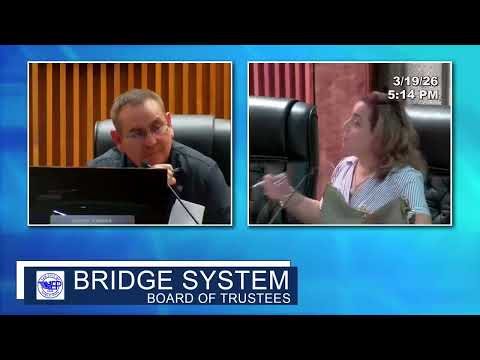
At the March 19, 2026 Bridge Board of Trustees meeting staff reported February revenues of about $1.9 million, described steps to mail toll tags and expand mobile enrollment, and outlined outreach and a forthcoming cash‑pay commercial rate change scheduled for May 1.
At its March 19 meeting the Bridge Board of Trustees was told that revenues for February were “$1.9 million and change,” and staff described steps to accelerate rollout of the Camino Royale Bridge toll‑tag system, including mobile enrollment and mailed tags for enrolled users.
The staff presentation, given by the operations staff member identified later in the record as Miss Ma, said year‑to‑date revenues are roughly $10.33 million and that the February number represents a roughly 25.8% increase over the same period last year. "Our revenues for the month of February were $1.9 million and change," she said, and staff circulated budget figures showing favorable variances compared with the budgeted pace.
Why it matters: better enrollment and fewer in‑office transactions can reduce congestion at bridge booths and lower staffing pressure. To make enrollment easier, staff said the city plans to buy laptops and tablets to enroll users at community sites (libraries, the mall and outreach in Pedras Negras) rather than require users to pick up stickers or cards only at the Camino Royale Bridge pickup location.
Staff described several implementation issues and operational limits. For some commercial accounts — fewer than 10 trucks, staff said — existing windshield stickers or cards are not being read by the system; staff said they are testing a license‑plate reader as an alternative and are arranging appointments with the affected drivers to install plate devices. Lety, a staff member who assists with commercial accounts, was also identified in the discussion as having contacted affected drivers.
On payments, staff said the system allows both cards/stickers and cards for pedestrians, and that the office will continue to accept cash for smaller amounts. Staff noted a $40 limit on credit‑card top‑ups set to limit processing fees; cash payments remain available for customers who want to deposit smaller amounts. "When people actually create their account and are able to do everything, what I want to do is make it a seamless process so that people don't have to come to the office," Miss Ma said.
Commercial rate outreach: staff said a rate change for cash‑paying commercial customers who are not enrolled in the toll‑tag system was approved previously and that the board will announce it publicly at a media roundtable. Materials circulated at the meeting state the change will be effective May 1 and include English and Spanish letters to be mailed to regional shipping companies and drivers. Staff said the change is intended to encourage commercial users to enroll in the toll‑tag system.
Staff also said some fees (for example, the lost‑ticket fee) were set by council and would require a council ordinance to revise. The meeting record shows staff reviewing the existing lost‑ticket refund procedure (which relies on camera review before refunds are processed). If the board wants fee changes brought forward, staff said those would be routed to council for ordinance consideration.
What’s next: staff scheduled a media roundtable at the bridge to announce the commercial outreach and said they will return with more operational details on mailings, license‑plate‑reader rollout and enrollment metrics. The board approved routine minutes earlier in the meeting and adjourned without taking additional policy votes on the toll‑tag program at this session.