Get Full Government Meeting Transcripts, Videos, & Alerts Forever!
Get email alerts on the School Assignment topic
No spam. Unsubscribe anytime.
Survey: about three-quarters of responding Revere parents prefer neighborhood middle schools over lottery
Summary
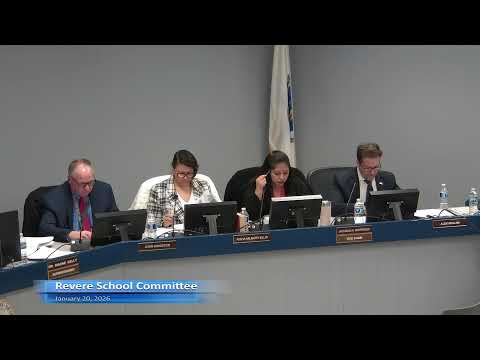
Dr. Kelly told the committee nearly 496 parents responded to a middle-school-placement survey; about 74% favored neighborhood-based assignments, with variation across feeder schools; the school committee will take a vote on Feb. 10.
Superintendent Dr. Kelly summarized results from a parent survey on middle-school assignment. The district received roughly 494–496 responses and 74% of respondents expressed a preference for neighborhood-based middle-school assignment rather than a lottery.
Results varied by elementary feeder: Whan parents showed the strongest neighborhood preference (about 92%); Lincoln parents were strongly in favor as well (about 81%); Beachmont and Hill responses were more mixed (around mid-50% for neighborhood preference in some feeders). Dr. Kelly noted nearly 200 free-text comments and read a representative selection that reflected both support for neighborhood predictability and support for a lottery to preserve choice.
Committee members raised implementation questions. Miss Montterroso and others clarified that special-education placements would be honored regardless of neighborhood assignment and that non-neighborhood requests would be handled similarly to elementary procedures (honored when enrollment allows). Dr. Kelly said sibling preference would not automatically carry over under a neighborhood model; transportation for non-neighborhood assignments is not provided.
The committee discussed whether changes would apply across grades or only to incoming sixth graders; the administration recommended applying the change only to incoming sixth graders (to avoid a major mid-cycle reassignment). Dr. Kelly said the committee will consider an official vote on February 10 and suggested revisiting boundary lines every three to five years as demographics shift.
The presentation gave committee members a basis for upcoming calendar and policy deliberations but did not include finalized boundary maps, cost estimates for transportation changes, or a final sibling-preference policy.