Get Full Government Meeting Transcripts, Videos, & Alerts Forever!
Get email alerts on the Rail Quiet Zone topic
No spam. Unsubscribe anytime.
Council delays final approval of railroad quiet-zone bid amid safety and budget questions
Summary
Caldwell council voted to place final action on a railroad quiet-zone construction bid on a future agenda after members and the mayor voiced concerns about missing pedestrian protections, uncertain long-term costs and current budget shortfalls.
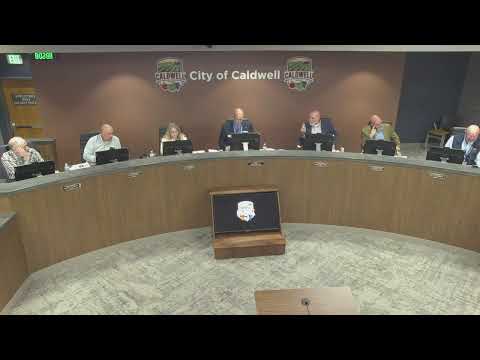
The Caldwell City Council voted March 16 to place final action on a construction bid for railroad crossing improvements and a proposed quiet zone on a future agenda, after weeks of staff work and renewed public scrutiny.
Mayor Phillips said he walked every affected intersection and concluded the current bid package offers a partial, not complete, solution. “I do not believe that it serves a public well to install a quiet zone without properly addressing pedestrian safety at those crossings,” he said, urging the council to slow down so pedestrian protections can be assured.
Councilors and staff described multiple cost and scope changes since the project’s inception. The mayor said earlier cost estimates once ranged in the millions but that the current per-intersection figures under discussion were much lower; he also warned of a projected $1.2 million city revenue shortfall that makes unscheduled capital spending risky. Transportation staff noted prior payments to the railroad for plan review and ongoing right-of-way commitments that would create recurring costs.
Councillor Tilmont pushed to move the item from a discussion to a formal action item; the council approved placing final bid approval on the next available meeting (either the March 25 town-hall workshop or the April 6 council meeting). The council’s procedural vote does not itself accept the bid; legal counsel confirmed that Idaho Code prevents taking final action on an item added after a meeting’s start.
Supporters of the quiet zone argued it improves downtown quality of life by reducing nighttime horn noise and that funding for parts of the project had been budgeted in prior years; opponents and cautious members highlighted the feasibility study’s age and recommended a rebid or a revised specification set that explicitly includes pedestrian crossing protections and a full accounting of long-term right-of-way costs.
The next procedural step is a scheduled agenda item for final approval; the council noted that the final action on the bid will not include public comment on the day of the vote, because it is a contract-acceptance item. The city will post updated materials in advance of the meeting and staff said they will respond to outstanding public-record requests that council members have filed.