Get Full Government Meeting Transcripts, Videos, & Alerts Forever!
Get email alerts on the Municipal Fees topic
No spam. Unsubscribe anytime.
Advisory board recommends reviewing town's recreation/wreck fee; staff benchmarks suggest large increases
Summary
A committee presentation showed Grand Island's recreation ("wreck") fees trail peer towns; the advisory board discussed raising per-unit fees (a proposed bottom-line goal of $750 for single-family units was mentioned) and exploring an open-space fee for commercial uses and solar farms.
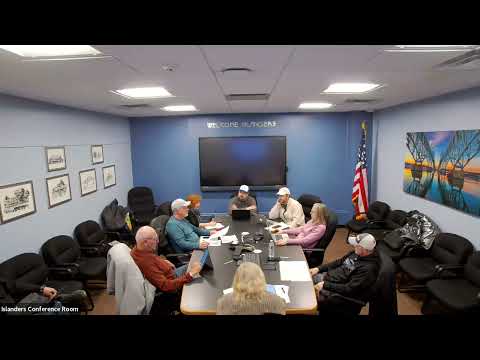
At a regular meeting of Grand Island's Parks and Recreation Advisory Board, a member presented benchmarking research that found the town's recreation fees are below peer communities, and urged the town to consider raising the fees to better align with comparable municipalities.
The presenter said peer examples suggested per-unit charges ranging up to about 0.3% of home value for combined open-space/recreation approaches, and proposed a working bottom-line goal of $750 for a single-family unit if the town chose to raise the existing "wreck" fee. The committee discussed whether apartment buildings should be charged per door and noted that charging per unit is a common practice for multi-family projects.
Members also discussed a separate commercial open-space fee for nontraditional footprints, including solar farms. The presenter said two common approaches are per-acre fees or a per-megawatt charge (best-practice examples cited roughly $1,500 per megawatt); members noted that instituting an open-space fee can create a local fund eligible for state grant-matching programs.
Committee members emphasized legal constraints under New York law (for example, limits on recreation fees for certain commercial recreation uses) and the need to draft fee schedules and implementation rules carefully. The group asked staff to research best practices on valuing developer-provided amenities and how to apply credits when a development provides public facilities.
No formal fee change was adopted at the meeting; the advisory board asked staff to continue research and bring a more detailed proposal, including implementation options and draft fee schedules, to a future meeting.