Get Full Government Meeting Transcripts, Videos, & Alerts Forever!
Get email alerts on the State Budget And Smartscale topic
No spam. Unsubscribe anytime.
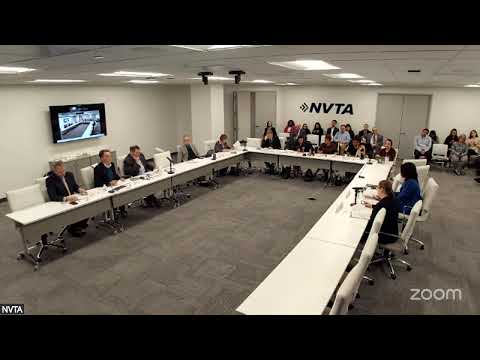
NVTA warns state budget moves could divert regional revenue; SmartScale scoring draws scrutiny
Summary
At its March 12 meeting NVTA leaders warned that Senate budget language could sweep newly generated revenues to WMATA and other statewide funds, and CTB and NVTA representatives called for SmartScale transparency after Northern Virginia's share fell sharply in recent rounds.
NVTA officials used their March 12 meeting to flag two separate state‑level risks to regional transportation funding: a proposed Senate budget sweep of newly generated revenues and a SmartScale scoring process that recent rounds have left Northern Virginia with little or no state funding.
Governance committee lead Miss Bayard told the authority that House and Senate budget conferees have proposed different approaches to providing WMATA operating and capital support. "The House proposed budget ... identified $153 million in general fund money which would be sustainable over two years to help with the WMATA operating subsidy," she said. By contrast, she said a Senate subsection (referred to as subsection J in the meeting) would divert net new tax receipts that should flow to NVTA and sweep Planning District 8 revenues into a WMATA capital fund — a step she described as legally and politically problematic for non‑compact jurisdictions such as Prince William County, Manassas and Manassas Park.
"Nowhere in anybody's SJ28 or DMV moves was there any recommendation that money should be coming to NVTA," Miss Bayard said, characterizing the proposed Senate action as a diversion of revenue intended for the authority.
Separately, DJ Gribbon, NVTA's Northern Virginia representative on the Commonwealth Transportation Board, presented an analysis of SmartScale scoring and said that after strong early rounds Northern Virginia's share of state SmartScale awards had dropped into the single digits and most recently to near zero in the latest round. "Northern Virginia shouldn't be getting zero under this," Gribbon said; he reported discussing the matter with the Secretary of Transportation and said he will press for greater transparency and accountability in SmartScale scoring.
Why it matters: Both the state budget treatment of new revenues and SmartScale outcomes materially affect how much state and regional funding flows to Northern Virginia projects. NVTA members emphasized they support additional state funding for Metro but oppose offsetting NVTA revenues to pay for it.
Authority position and next steps: Members reinforced that any WMATA support should come from new state funds, not from NVTA revenue. Staff and members said they will continue education and advocacy with General Assembly conferees, the Secretary, and CTB staff to ensure Northern Virginia receives its share of any new tax revenue and to seek SmartScale transparency. NVTA staff did not identify a final conferees' outcome at the meeting; members were told resolution may take months as conferees negotiate the biennium budget.