Get Full Government Meeting Transcripts, Videos, & Alerts Forever!
Get email alerts on the Stormwater Compliance topic
No spam. Unsubscribe anytime.
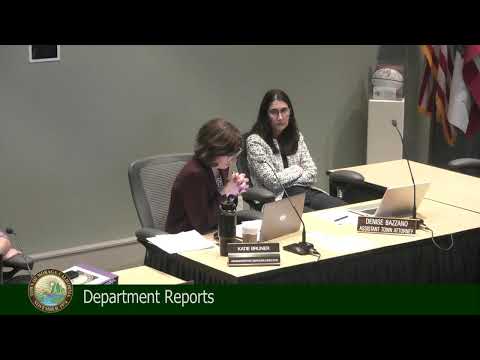
Moraga council backs staff work to join Contra Costa regional stormwater compliance program
Summary
After a technical briefing, the council directed staff to return with formal participation documents to join a Contra Costa REC joint powers authority that would let developers buy off-site stormwater treatment credits and help the town meet municipal regional permit goals.
Moraga’s town council on May 11 voted to direct staff to bring formal participation documents back to the council for the Contra Costa Regional Alternative Compliance (REC) joint powers authority, a regional program designed to give agencies and developers an off-site option to meet Municipal Regional Permit (MRP) stormwater requirements.
Public Works Director Nate Levine and Clean Water Program representative Rinta Perkins outlined the REC system as a credit-banking approach: public or private projects that construct green stormwater infrastructure (GSI) generate compliance units (treated acres) that can be sold to buyers—other agencies, private developers or Caltrans—who need to meet on-site treatment obligations. The REC administrator (a JPA) would certify transactions, collect payments and oversee a Community Facilities District (CFD) to fund long-term operations and maintenance.
Levine told the council Moraga—has a current retrofit target of 1.07 acres and is largely compliant under the existing permit but faces new and costlier requirements in the next permit cycle. He said on-site GSI can be expensive and sometimes infeasible because of site constraints, while regional projects can achieve economies of scale and address difficult pollutants such as PCBs and mercury.
Perkins said the REC model benefits small jurisdictions without large mitigation sites and highlighted examples where Caltrans and Richmond-funded projects could treat PCB-laden runoff from industrial corridors, reducing the compliance burden on individual cities.
Members questioned liability protections, how contaminated sites would be handled, and whether participation obligates the whole community. Legal counsel said the JPA and CFD structure is project-based: parcels would annex only if property owners choose to participate, and Superfund sites would be excluded from REC projects.
Council members also raised O&M concerns and whether JPA administrative costs would outweigh benefits. Levine and Perkins said administrative costs would be shared and staff calculations indicate potential net value for Moraga, especially given limited local development and intermittent project needs.
After questions, the council member moved and the body approved a motion directing staff to return with formal participation documents and draft agreements for council consideration. The motion passed on a voice vote. Staff said the work is funded through a US EPA grant if completed by the end of the fiscal cycle, creating an incentive to act quickly.