Get Full Government Meeting Transcripts, Videos, & Alerts Forever!
Get email alerts on the Fighting For Freedom Exhibition topic
No spam. Unsubscribe anytime.
Exhibition reframes freedom through 250 years of African‑American craft
Summary
At a Humanities Tennessee event in Knoxville, Dr. Torren Gatson described the 'Fighting for Freedom' exhibition and the Black Crafts People Digital Archive, highlighting maker skill, contested histories and plans to expand the archive from ~2,500 public records to roughly 12,500 entries.
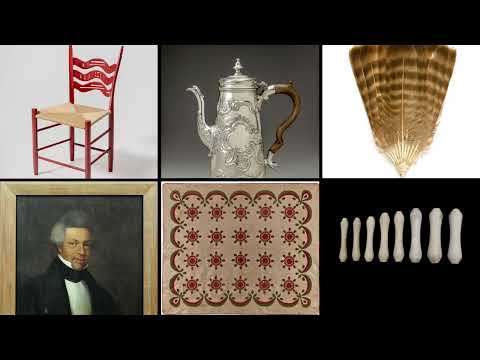
At a Humanities Tennessee program in Knoxville, Dr. Torren Gatson, co‑curator of the Fighting for Freedom exhibition, traced 250 years of African‑American making and urged audiences to see craft as a pathway to freedom and identity. The exhibition, assembled with partners including the Daughters of the American Revolution and loans from the Tennessee State Museum, gathers objects that reflect both mastery and contradiction in early American life.
Gatson said the Black Crafts People Digital Archive currently lists "roughly 2,500 individuals both named and unnamed who are stored in the database from two states, South Carolina and Tennessee," and that a website transition planned for June aims to add "hopefully some 10,000 more names from about 16 more states including in the Caribbean." The archive, Gatson said, helps documentary research on makers often omitted from standard museum narratives.
The exhibition groups 47 objects into thematic sections — mastery, contradiction, pride, identity and "moments" — to show how making could be both a means of survival and an avenue to recognition. Gatson pointed to a bed made by famed East Tennessee furniture maker Lewis Buckner (on loan from the Tennessee State Museum) as an example of technical skill and local visibility. He also discussed objects tied to enslaved makers who worked at sites now central to American memory, noting pieces connected to John Hemings at Monticello and documents such as the Hoben payroll that register labor at places like the White House and the Capitol.
On identity, Gatson highlighted portraits, commissioned objects and a daguerreotype by Augustus Washington, calling the photograph of John Brown "one of the most iconic photos of all time" and using the story to show how African‑American makers shaped public images and historical memory. Gatson told the audience the exhibition is designed to provoke questions about what "freedom" meant across different makers and landscapes and to surface both named and unnamed contributions often left out of mainstream exhibits.
The exhibition and the archive together aim to broaden how museums and the public think about craft, technique and authorship in American history. Gatson closed by noting the show's interpretive goal: to prompt visitors to consider why people make things, and how those acts of making connect to identity and claims to freedom. The presentation preceded a panel discussion on craft and agriculture at the East Tennessee History Center.