Get Full Government Meeting Transcripts, Videos, & Alerts Forever!
Get email alerts on the Land Management Ordinance topic
No spam. Unsubscribe anytime.
Hilton Head Gullah task force urges data and caution as land‑use rewrite advances
Summary
At a May 4 meeting, the Town of Hilton Head Gullah Land and Cultural Preservation Task Force reviewed a staff report, pressed for acreage and tax‑sale data, and warned against rushing a Land Management Ordinance rewrite that members say could disproportionately affect historic Gullah neighborhoods.
On May 4, the Town of Hilton Head’s Gullah Land and Cultural Preservation Task Force heard a staff update and pressed town staff for specific acreage and tax‑sale data as it considers revisions to the island’s Land Management Ordinance (LMO).
Miss Sheronica Stewart, project manager for the historic neighborhoods permitting and design studio, told the task force that since the program began in October 2021 it has handled 132 requests through April 2026, with 107 completed and 25 still active; 12 requests arrived this year and five remain active. "Overall, from the inception of this program in October of 2021 to April of 2026, there has been a total of 132 requests," Stewart said.
Members spent most of the meeting on the LMO rewrite, which will define what can be built where and how on Hilton Head Island. The task force’s members said the work matters to historic Gullah neighborhoods because changes to density, land‑use rules and design standards could alter property values, uses and development pressures. "It's more than just policy. It's about the growth and how it's managed on the island," the task force chair said.
Thomas Boxley, executive director of the Gulla Historic Neighborhoods Community Development Corporation, gave the group an acreage estimate for those historic neighborhoods: "roughly 900–950 acres somewhere in that," he said. Members indicated that, when gated communities and PUDs are excluded, the remaining land that the town regulates is concentrated in historically Gullah areas and therefore that LMO changes will disproportionately affect those communities.
Task force members repeatedly urged staff not to rush the rewrite. Several speakers asked that prior local studies and reports — including the Walker Collaborative recommendations and earlier Rudat work cited in the meeting — be integrated into the process, and asked that community input be meaningfully reflected in any ordinance language. One member said the group preferred getting the code right over meeting a tight deadline.
On legal oversight, members acknowledged that outside organizations have submitted letters and are monitoring the process. Task force members said those groups had offered assistance but had not filed litigation as of the meeting; staff said they had received inquiries and correspondence.
The group asked staff to provide several datasets and place them on the next meeting agenda: a parcel‑level list of town‑owned parcels that were formerly Gullah‑owned; acreage and percentage of land outside gated communities and PUDs; and a breakdown of tax‑sale exposure and heirs‑property data. Staff said they would compile available parcel data and invite Lana Ray Sellers of the Low Country Foundation to present her datasets at the next meeting.
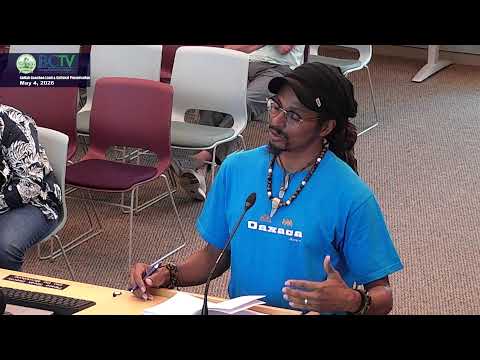
During public comment, resident Mr. Scott urged more time and scrutiny for the rewrite, saying many of the issues raised now have been repeated in earlier studies and deserve careful treatment rather than a rapid drafting timetable. "I just feel as though... the task force is kind of rushing through these potential amendments," he said, and he asked for greater accountability about past town purchases of Gullah‑owned lands.
The task force confirmed a request to have the requested data and related background materials placed on the next meeting agenda and closed the meeting after issuing thanks to staff and members. No formal votes on the LMO were taken at the session.
The task force is scheduled to continue its work; members asked staff to return with the parcel and tax data to support further deliberations.