Get Full Government Meeting Transcripts, Videos, & Alerts Forever!
Get email alerts on the Online Permitting topic
No spam. Unsubscribe anytime.
Greenwich IT leaders press departments on software audits, ADA compliance as online permitting advances
Summary
Town IT officials told budget reviewers the town lacks full visibility into townwide software spending and emphasized vendor ADA compliance and integration work as the town pursues an online permitting initiative involving multiple departments.
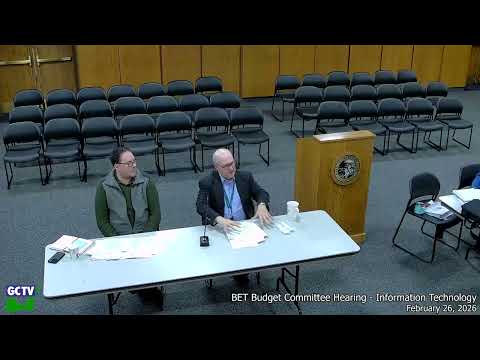
At a public budget review, Tom Klein, the town’s chief information officer, and Matt Santa, business systems manager, urged a coordinated approach to a planned online permitting system and called for better townwide inventory of software subscriptions.
Committee member Doug asked about account 52360 (rental/maintenance of software). Matt said the IT department’s own software budget is about $1.9 million and that townwide software spending is around $6 million; he and Klein said some software spends are siloed in other entities (Board of Education, library) and suggested a finance-led audit to confirm whether subscriptions are current and properly categorized.
Klein said IT’s role is largely infrastructure and security oversight rather than owning departmental cloud apps. "I’m wearing my digital risk hat. I’m not working on your technology, I don't represent your technology, but I just want to make sure you're doing certain things that apply towards all entities to reduce digital risk," he said.
Officials described online permitting as a townwide initiative driven by the Office for the First Selectman and multiple departments (tax collector, planning, building); they said one design goal is to automate interdepartmental checks (for example, the tax collector validation now done by an in-person stamp could be an automated lookup in a permitting workflow). Klein stressed that governance and departmental decisions — not IT alone — will determine what is enforced through the system.
On ADA compliance, Klein said vendors of public-facing cloud applications must meet federal ADA website accessibility standards or provide a documented remediation roadmap. "We ask the vendor, are you compliant?" Klein said. He added that IT can require remediation roadmaps but cannot rewrite third‑party cloud applications.
Matt said the IT software line showed a modest increase this fiscal year (about 6 percent), driven mainly by vendor subscription escalations and a few added items such as online-permitting components and remote-management tools. The presenters said they will continue working with departments, the Board of Education's 'digital toolbox' and auditors to align cybersecurity and ADA reviews with procurement and budgeting.
Committee members asked for systematic reviews of subscriptions and noted the potential to fold some fees (for example, abutters lists used in permitting) into online workflows, which could reduce in-person transactions and change small revenue lines.
The meeting produced no formal policy changes; presenters said next steps include providing clearer line‑item tracking, coordinating a possible finance audit of software, and continuing vendor ADA and security reviews as the permitting project advances.