Get Full Government Meeting Transcripts, Videos, & Alerts Forever!
Get email alerts on the Edtech Policy topic
No spam. Unsubscribe anytime.
Parents and advocacy groups press LA Unified on device policies and content filtering
Summary
Multiple speakers, including members of Schools Beyond Screens, criticized LA Unified's device policies and content filtering, reported students accessing graphic material and games referencing criminal cases, and urged an emergency audit, filtering changes and suspension of widespread device use for young students.
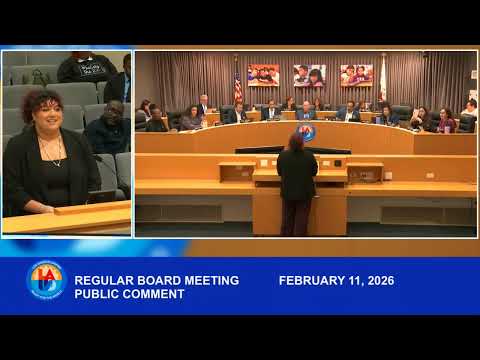
Several parents and advocacy groups used the board’s public comment period on Feb. 11 to demand changes to Los Angeles Unified’s device policies and content‑filtering systems.
Speakers associated with Schools Beyond Screens described repeated incidents in which students accessed inappropriate or disturbing content on district‑issued devices. Andrea Self, a parent and member of the group, said students were able to access Department of Justice files related to the Epstein case and a game she described as “Five Nights at Epstein’s Island” that exposes children to graphic material. She called for an “emergency audit of current content filtering on all student devices,” blocking of game‑hosting and unmoderated streaming platforms during school hours, real‑time filtering that can block emerging inappropriate content, and transparency reports to parents within 30 days.
Other callers, including Sandra Martinez Row and Dr. Deie Iikinstein, criticized the district’s edtech strategy more broadly, arguing it diverts funding from teachers and classroom resources, raises equity concerns, and can normalize addictive, non‑educational content. Todd Grabarski highlighted specific language in the district’s Responsible Use Policy that he said waives the district’s liability and could expose parents to having to accept risk on behalf of their children.
Several callers pressed the board to reconsider heavy device use for younger grades and to prioritize funding for teachers, smaller class sizes and basic classroom materials rather than one‑to‑one device programs. Some speakers tied their requests to elections and vendor accountability, arguing parents and communities should be able to shape device policies.
Why it matters: Parents described claims of real harms—exposure to sexually explicit or traumatic material and access to unmoderated streaming—that they say the district has not yet addressed. Callers asked for immediate technical fixes (filter auditing, blocking certain platforms) and policy changes (reconsidering device deployment for younger grades, revisiting liability waivers).
What the board did: These items were aired during public comment; the Feb. 11 meeting moved into closed session for personnel and litigation matters and did not record an immediate board vote on device policy or the requested audit. Commenters asked for a 30‑day response timeframe for some actions; the board did not announce such a response at the meeting.
At least one parent explicitly requested concrete actions: a technical audit, updated filtering rules, platform blocks during school hours and transparency reports to parents.
Next steps: The transcript records caller demands and alleged incidents; the district’s technology and legal staff would need to confirm whether the reported content access occurred and whether existing filters functioned as described. Public commenters asked the board to act quickly; no action date was recorded in the Feb. 11 public record.