Get Full Government Meeting Transcripts, Videos, & Alerts Forever!
Get email alerts on the Hr1 Health And Social Services topic
No spam. Unsubscribe anytime.
Kings County officials warn HR1 could shift millions in costs to county; CSAC seeks nearly $1.9 billion in state aid
Summary
At its March 24 meeting, Kings County staff warned that federal reconciliation law HR1 will raise local administrative workloads and shift program costs to counties; CSAC urged the state to fund about $1.9 billion for indigent care, hospitals, eligibility work and behavioral health to offset the impact.
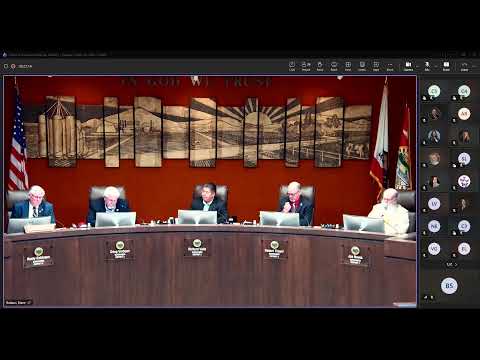
Kings County Board of Supervisors on March 24 heard a detailed study session on HR1 — federal reconciliation legislation enacted in July 2025 — in which county officials warned the law will increase local administrative work, reduce benefits for some residents and shift substantial costs to county government.
HSA Director Wendy Osefo summarized the local estimates, saying Kings County currently has about 36,000 CalFresh (SNAP) recipients — "approximately a quarter of our county's total population" — and that the program issues roughly $65 million in benefits annually. She told the board HR1 will expand work requirements and tighten asset rules; county staff estimate "a little over 2,000 residents may be subject to expanded work requirements," about 9,700 people could see a reduction or loss of CalFresh benefits and some lawfully present immigrants could lose eligibility. Osefo added that federal administrative funding for CalFresh will drop from 50% to 25% effective Oct. 1, 2026, a change she described as "a straight cost shift" to counties and one that could require Kings County to absorb about $820,000 in additional administrative costs in fiscal year 2026–27 (county estimate).
"Ultimately, these new provisions aim to reduce federal spending by limiting eligibility and access for individuals to each of these programs," Osefo said, emphasizing the county's projections are estimates pending federal and state guidance.
On the Medi‑Cal side, Osefo reported about 69,000 enrollees in Kings County (roughly 45% of the population) and said staff estimate about 19,500 individuals could be subject to new work requirements and more frequent eligibility redeterminations. Kings County qualifies for a short‑term unemployment‑rate waiver for Medi‑Cal (an 8% threshold), she said, which should provide temporary relief so long as the county's unemployment rate remains above that level. But she warned that loss of a waiver or downstream state policy changes could increase county exposure to penalties tied to payment‑error rates and raise indigent care costs.
"If we decide to reduce staffing to compensate for this increased cost, we will increase our errors, we will decrease our timeliness, we will create backlogs, and that will then increase our error rate," Osefo told the board, describing a cycle that could raise longer‑term costs.
County behavioral health and public health directors described program‑level effects. Interim Behavioral Health Director Christie Lapki said immigration‑status changes could reduce reimbursements and that repeated re‑enrollment requirements may be particularly burdensome for clients with severe mental illness; Lapki estimated potential lost reimbursement in the low‑millions under some scenarios. Public Health Director Rosemary Ann warned that reduced Medi‑Cal coverage and clinic reimbursement could strain local federally qualified health centers and increase emergency‑room use.
Carrie Brownstein, executive director of the County Medical Services Program (CMSP), told the board CMSP has no ongoing revenue and warned that many people who lose Medi‑Cal coverage could move to CMSP, creating near‑term budget pressure for the indigent‑care program.
CSAC advocacy push and funding request
Graham Nace, CEO of the California State Association of Counties, told the board counties statewide face large, structural cost shifts from HR1 and presented a coordinated request to the state. Nace said county leaders and health executives drafted a near‑$1.9 billion ask for the current state budget to triage impacts, and described an out‑year, ongoing need that could rise to approximately $4.5 billion.
Nace outlined the budget‑year request as including about $761 million for indigent care, $500 million for public hospitals (with higher out‑year support), $373 million for eligibility and workload costs tied to re‑determinations and new work requirements, and $224 million for behavioral health impacts. "There is no county in the country that will not be severely impacted by HR1. Zero," Nace said, urging supervisors to contact their state and federal delegations and to support CSAC's advocacy work.
County fiscal outlook and next steps
County staff told supervisors they expected to absorb roughly $800,000 of the Human Services Agency's increased administrative costs in the coming fiscal year using prior‑year funds but that ongoing exposure will require decisions about general‑fund contributions, program adjustments or seeking new revenue. Staff recommended continued advocacy with state and federal partners and close monitoring of federal guidance; multiple presenters emphasized the estimates are projections and remain subject to change as clarifying rules and state decisions arrive.
Board action and other business
The board reported one closed‑session action: counsel stated that "on motion by Supervisor Barbone, seconded by Supervisor Nace, with a vote of 5 to 0, the Board approved a property settlement agreement between the county and Cornerstone." The board also paused for technical audio problems earlier in the meeting and took time to recognize CSAC Institute graduates.
Why this matters: Kings County officials said HR1's combined effect — fewer people covered, higher uncompensated care at hospitals and a federal administrative cost shift — could materially increase county spending on indigent care and drive decisions about general‑fund priorities, staffing and local services unless the state or federal governments provide offsetting support.
Next procedural step: County staff will continue to refine local estimates as federal and state guidance arrives, pursue state advocacy through CSAC and return to the board during upcoming budget hearings with options for any necessary general‑fund adjustments.