Get Full Government Meeting Transcripts, Videos, & Alerts Forever!
Get email alerts on the Groundwater Policy topic
No spam. Unsubscribe anytime.
Mid Kings River GSA presses state over proposed 20‑acre‑foot de minimis exclusion; members warn of local impacts
Summary
At its March 24 special meeting the Mid Kings River Groundwater Sustainability Agency discussed a draft state proposal to exempt pumpers using 20 acre‑feet or less from reporting and fees, with staff and public commenters warning the change could complicate local allocations, Prop 218 planning and monitoring.
The Mid Kings River Groundwater Sustainability Agency on March 24 debated a draft state resolution that would exempt entities pumping 20 acre‑feet or less per year from reporting and fees, a change several board members and stakeholders said could undercut local planning and complicate upcoming outreach and Prop 218 work.
Chuck, a GSA staff presenter, told the board the draft would ‘‘exclude from both reporting and fees anyone who pumps 20 acre feet a year or less’’ and that the change is in draft form with comments due March 30 and a state hearing on April 7 in Sacramento. He said the state’s previous de minimis threshold had been about two acre‑feet, and that the increase to 20 acre‑feet prompted concern at the stakeholder committee that it could ‘‘feel a little bit like a divide and conquer’’ by exempting many small users from state reporting while local rules might differ.
Why it matters: the GSA is drafting its groundwater sustainability plan (GSP) and preparing potential Prop 218 election materials and allocation rules. Board staff warned that a higher state threshold could leave the GSA with a harder set of choices—either match the state's exemption, which would reduce the GSA’s data and fee base, or keep a lower local de minimis threshold and risk imposing requirements on some users the state would exempt.
Public commenter Chipmill said the change from a two‑acre‑foot standard to 20 acre‑feet is disruptive to local planning. "We spent a lot of time trying to create a plan with the two‑acre‑foot de minimis amount… and now they've changed it," he said, arguing the shift could create enforcement and outreach complications for the GSA.
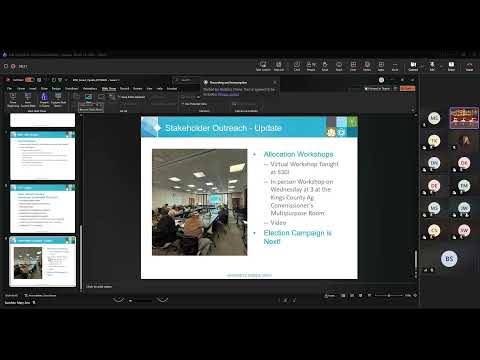
Board members and staff discussed next steps. Staff said the GSA has not decided to adopt the state's proposed threshold locally and that, for now, the GSA is still tracking users who pump more than two acre‑feet under its local rules. Chuck said outreach to landowners will include clear explanations of any changes if the state policy is finalized and that staff can prepare a comment letter or have board members appear at the Sacramento hearing if the board directs.
The board also debated operational implications: the GSA will proceed with planned updates to its groundwater model and a subsidence model to inform allocations and critical headwater levels; both efforts will be brought back to the board for approval. Staff said the models and outreach—to register wells and explain allocations—are intended to give the GSA better data to make allocation and fee decisions regardless of the state's final threshold.
The board did not adopt a new local de minimis threshold at the meeting; members encouraged continued stakeholder outreach and directed staff to keep the board informed about the state process and to prepare options for how local rules could align with or differ from a final state policy.