Get Full Government Meeting Transcripts, Videos, & Alerts Forever!
Get email alerts on the Education Workforce topic
No spam. Unsubscribe anytime.
Project SEARCH partnership gives Fairbanks students on-the-job training and aims for employment after graduation
Summary
On the Alaska Adventure podcast, Fairbanks North Star Borough School District's Dr. Luke Miner interviews Lisa Laqua and Jesse Byer about Project SEARCH, an internship program that pairs students with disabilities with hospital internships; speakers describe hands-on training, a 10'12-week schedule and a May 14 graduation for five interns.
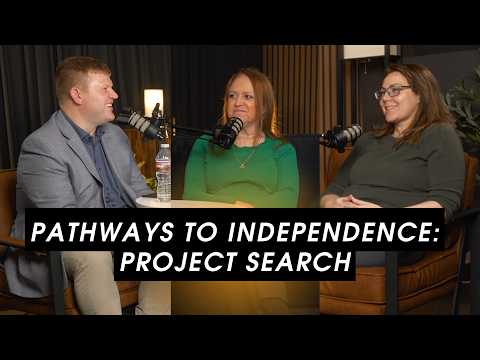
Dr. Luke Miner, superintendent of the Fairbanks North Star Borough School District, devoted a recent episode of the district's Alaska Adventure podcast to Project SEARCH, a supported internship program that places young adults with disabilities into hospital and district job sites to build workplace skills.
Project SEARCH teacher Lisa Laqua said the program centers on classroom instruction plus on-the-job internships that teach both soft skills and role-specific tasks. "We set the expectations really high and we push our interns to rise to that," Laqua said, describing classroom time devoted to self-advocacy, financial basics and problem-solving followed by several hours of supervised work at host departments.
Jesse Byer of Foundation Health Partners described the hospital's role as mission-driven workforce development and employer engagement. "Project SEARCH is the definition of people first," Byer said, adding that the hospital has hired interns from earlier classes and that executive leadership, including champion Clint Brooks, supports the partnership.
Laqua outlined the typical day: 45 minutes to an hour of morning instruction, interns depart around 8:30 a.m. for roughly 4.5 hours of internship work, and return for an afternoon wrap-up to review questions or problems experienced on the job. Internships generally run about 10 to 12 weeks depending on the school calendar.
The program places interns in a range of roles, Laqua said, from custodial and laundry work to clerical office positions and clinical support roles that build communication and interaction skills. She emphasized that the program's goal is not to staff the hospital but to prepare interns for competitive employment across the community: "We're really looking for making them suitable to be in the community to make a difference in the community," she said.
Speakers discussed practical workplace supports, including identifying required accommodations once interns are on-site and before employment problems arise. Laqua said accommodations often become clear in the actual work setting and the program works with employers to find reasonable adjustments under ADA-related expectations.
The hosts said a graduation ceremony is set for May 14 at the hospital and that five interns make up the current cohort. Byer characterized the program's outcomes positively and stated the hospital has seen strong employment results; he said the district has achieved 100% employment from Program SEARCH graduates for the past five years, a claim attributed to Byer and not independently verified in the episode.
Laqua and Byer invited families and community partners to schedule tours to see interns at work and learn more about placements; Laqua said the program has more applicants than spots for the first time this year. The episode closed with Miner thanking the guests and encouraging listeners to learn more about internship options.
The episode focuses on program description, training routines and employer partnership; it records participants' statements of outcomes and practices but does not provide independent verification of employment statistics or funding details.