Get Full Government Meeting Transcripts, Videos, & Alerts Forever!
Get email alerts on the Future Ready Plan topic
No spam. Unsubscribe anytime.
Parents, students and advocates urge pause to Pittsburgh Public Schools' 'Future Ready' facilities plan
Summary
At a March 23 public hearing, parents, students and community groups urged the Pittsburgh Public Schools Board to delay or revise the Future Ready facilities plan, saying it was rushed, lacked meaningful family input, risks closing community schools and may undermine equity and staffing.
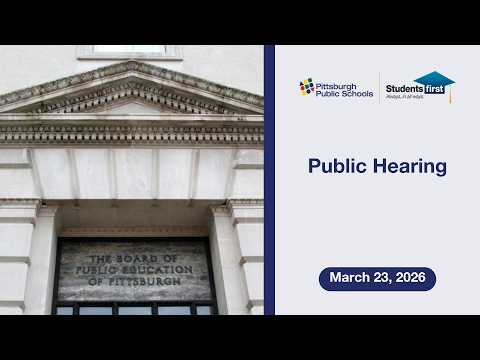
Dozens of parents, students and advocates told the Pittsburgh Public Schools Board of Directors on March 23 that the district's proposed Future Ready facilities plan is rushed, lacks meaningful family input and will undermine equity and community supports if implemented as written.
Sandra Woolly, a retired educator who said she chairs PIN's education task force, told the board PIN had initially supported the plan but now asks the board to "vote no" unless the district addresses family concerns, lengthens the timeline and preserves community-school services. "The plan was developed without meaningful family input," Woolly said, urging the district to "work with other stakeholders" and to treat closed school buildings as assets for community use.
Other speakers described how the plan could disrupt staffing and programs. Holly Cox, a PPS parent and PIN member, said the pace of changes is unrealistic and highlighted an ERS recommendation that such reconfiguration take three to five years. "Year one is when everyone is moved to their new buildings. It's only after they're moved that planning even starts," Cox said, asking whether community-school services would continue for families moved to different buildings.
Mike Cummings of the Penn Education Justice Task Force criticized the plan for undermining its stated equity goals by allowing exceptions that create inconsistent grade bands and by reducing rather than expanding community schools. He also said the district did not rely on a comprehensive demographer study and appeared to be rushing implementation, which risks harm to the most marginalized students.
Parent Sarah Zangle used a visual "marshmallow and cup" analogy to argue the district is shifting students without addressing root causes. She noted current building utilization ranges from roughly 23% to 109% capacity and said the district's reconfiguration could leave many schools still over- or under-capacity. "What if the district reimagined the flow of the marshmallows and how we control the cups and how we control the lines?" Zangle asked, proposing flexible admission zones that could adapt to enrollment changes.
Speakers asked for clearer plans for transitions, staffing protections and preservation or expansion of community-school services (food pantries, backpack programs, on-site health and mental-health supports). Several commenters said the district should delay large-scale moves until educational programming, collaboration spaces and specialized facilities are designed and in place.
Board staff did not take formal action during the hearing. The board president thanked speakers and adjourned the meeting; no vote on the Future Ready plan was recorded at this session. The board is scheduled to meet again on Wednesday.