Get Full Government Meeting Transcripts, Videos, & Alerts Forever!
Get email alerts on the Sign Variance topic
No spam. Unsubscribe anytime.
Board approves oversized signs on E‑470 for Apple Green convenience sites
Summary
Commerce City’s Board of Adjustment approved multiple variances allowing Apple Green convenience sites along E‑470 to install freestanding signs up to 30 feet high and roughly 242 square feet in area, with staff and applicants citing driver visibility and safety at highway speeds as justification.
The Commerce City Board of Adjustment approved a set of variances permitting oversized freestanding signs for two Apple Green convenience‑with‑fuel sites along E‑470, finding the highway’s speed and site geometry justified departures from the municipal sign code.
Planner Nathan Chavez told the board the proposals are for sites that are only accessible from E‑470 and sit in a lowered corridor with berms 13–33 feet above the roadway. For the northbound site at 9022 E‑470 the applicant requested an increase in sign area to 242 square feet (from a 60 sq ft maximum) and a height increase from 8 feet to 30 feet. Staff recommended approval, citing sight‑distance needs at 75 mph and the inability to place an off‑site directional sign where motorists would have adequate time to exit.
Roger Wilson of Freeman Signs, speaking for Apple Green, presented engineering visibility calculations and said motorists traveling at highway speeds need roughly 1,200 feet of advance notice to identify an exit and make a safe lane change. He described internal illumination for brand logos and price displays and said the signs would include breakaway bases consistent with CDOT specifications.
Board members asked about illumination, residential visibility and wind/engineering; staff and the applicant said internal illumination was proposed, the nearest potential private uses would be many hundreds of feet away, and structural engineering and breakaway bases would be addressed at the sign‑permit stage. Multiple board members cited the safety rationale and the unusual site geometry in favor of approval.
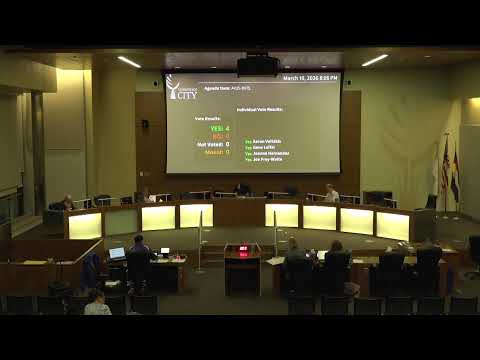
Motions to approve the variances for the northbound and southbound sites were made, seconded and passed; the record shows electronic votes of four yeses on each motion. Staff noted final engineering, precise setbacks and permit details would be reviewed and finalized during the sign‑permit process.
The approved variances allow the Apple Green sites to proceed with the sign designs presented to the board, subject to standard building and sign‑permit conditions.