Get Full Government Meeting Transcripts, Videos, & Alerts Forever!
Get email alerts on the Opioid Abatement Funding topic
No spam. Unsubscribe anytime.
Coffee County panel hears three requests for opioid-abatement funds; decision postponed to April 16
Summary
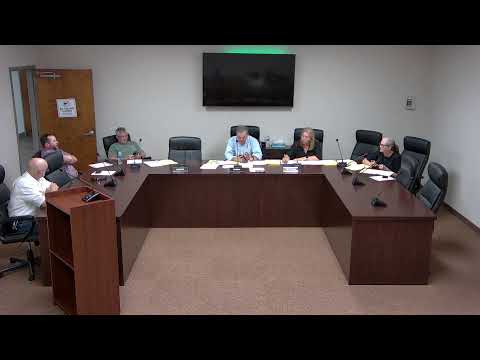
The Coffee County Opioid Abatement Commission on April 2 heard presentations from the county public defender and two recovery-housing providers seeking local opioid settlement and state grant support but did not award funds, instead scheduling a follow-up meeting for April 16 to set disbursements and conditions.
Coffee County public defender John Nickel told the Opioid Abatement Commission on April 2 that his jail-based social-work program has completed 674 initial assessments and facilitated 174 treatment placements, and he asked the commission to continue local opioid-abatement funding for the coming fiscal year. "The social workers had completed a total of 674 initial assessments," Nickel said, adding that placements have a 74% completion rate and that program participants have accrued 7,076 program days.
Nickel said the program — which began operating April 14, 2024 — employs licensed and bachelor-level social workers who meet clients at arraignment, arrange treatment placements and provide follow-up services. He asked the commission to fund the program for July 1, 2026, through June 30, 2027, and warned that local approval will be needed promptly to include positions in the state budgeting cycle. He also said the commission should condition grants on quarterly progress reports so the county can verify funds are being used for prevention, treatment, recovery and education.
Also presenting were two recovery-housing providers. Caleb McCall, executive director of Be the Bush Recovery Ministries, proposed a Coffee County Men’s Recovery Housing and Workforce Reintegration initiative to support 20 Coffee County men through a three-phase model (induction, training and reentry) that pairs structured sober housing with work-therapy enterprises. McCall said the county share for the program’s induction phase would be about $4,835 per resident and argued the program would reduce jail costs and pressure on local facilities.
"Our project description — Coffee County Men's Recovery Housing and Work for workforce reintegration — will provide residential recovery services, workforce development and stabilization support for adult men from Coffee County impacted by opioid use disorder," McCall said.
Tasha Hill, director of Miriam House, presented a companion proposal for women that would prioritize 10 Coffee County residents and combine long-term, faith-based recovery housing with workforce activities such as a local cheesecake shop and a cleaning enterprise. Hill cited internal outcome tracking as of April 8, 2025, saying, "72% have remained completely sober and substance free since graduating," and noted a 16% recidivism rate among graduates.
Presenters framed their requests as cost-saving alternatives to incarceration. The discussion included cost comparisons presented by applicants: several speakers noted a typical local jail operational cost cited in the presentations of roughly $61 per inmate per day (about $22,316 per year) versus the per-resident program costs cited by the applicants. Commission members also heard that Coffee County jail occupancy has recently been reported at about 93–95%.
The commission took no awards or final votes on funding at the April 2 meeting. Members unanimously approved motions to accept applicants’ written materials and hear oral presentations and then agreed they need staff to confirm the total opioid-abatement funds available before deciding allocations. Chair Robert Carter said the commission would reconvene and make awards after that accounting; he closed the meeting by announcing the next session would be at 5:30 p.m. on April 16. "We will adjourn the Coffee County Opioid Abatement Commission meeting to 5:30 on April the 16th," Carter said.
Next steps: the commission asked staff to provide the total available settlement and state funds, and applicants were told commissions typically condition awards on periodic progress reporting. The April 16 meeting is expected to include final disbursement decisions and any grant conditions the commission adopts.