Get Full Government Meeting Transcripts, Videos, & Alerts Forever!
Get email alerts on the Youth Services topic
No spam. Unsubscribe anytime.
Volunteers for Youth Justice tells Caddo Parish committee Harbor served about 12,000 people last year; commissioners weigh follow-up on funding and prevention
Summary
Kelly Todd, executive director of Volunteers for Youth Justice, told the Caddo Parish Juvenile Justice Committee on March 19 that the Harbor one-stop youth center served roughly 12,000 individuals last year, expanded services including vaping-prevention classes and a food bank, and helped divert truancy cases from juvenile court; commissioners asked staff to track outstanding funding for an STD test-kit program and explore program expansions.
Kelly Todd, executive director of Volunteers for Youth Justice, told the Caddo Parish Juvenile Justice Committee on March 19 that the Harbor, a one-stop resource center in Caddo Parish, served about 12,000 individuals last year after the program began systematically counting parents as well as youth.
“That was 12,000 individuals because now we're counting parents,” Todd said, describing the Harbor as a hub where families can access food, school supplies, counseling referrals and substance-use education without traveling across town.
Todd told commissioners the Harbor handled 744 walk-in cases last year — people who were not referred by probation, the Department of Children and Family Services or schools — and made 221 referrals to outside agencies for services such as mental-health counseling, housing and legal aid. She said those on-site partner services, and rent paid by tenant organizations, helped maintain three case managers who provide immediate case work.
The Harbor also expanded prevention programming, Todd said. A vaping-prevention class launched last year and served 205 middle- and high-school students; Todd said 120 of those students reported having illegal substances in their vaping devices. The class is offered Saturdays, with parents required to attend the final 30 minutes, she said.
“We started this class in response to vaping,” Todd said. “If they have that in their system, they then have to do a six-week education class … so they can return to school. They're not expelled.”
Commissioners pressed for more detail on scaling prevention into elementary schools and on the resources needed. Todd said school-based delivery is preferable for broad prevention but that Harbor-based programming could be expanded if the Harbor secured additional trainers, security and funding.
Todd also described other Harbor offerings: a universal food bank open weekdays with refrigerated storage that served 703 clients last year; a new partnership to provide Brentwood outpatient mental-health services for students whose symptoms prevent them from attending school; a calming studio for supervised family visits; and trust-based relational-intervention training delivered in the men's correctional facility to support reentry.
On truancy, Todd said the Harbor now conducts mandatory 'harbor hearings' designed as a problem-solving conference before cases move to juvenile court. She reported 205 such hearings to date with no resulting referrals to juvenile court. Director Randall and commissioners said the process has reduced truancy-related workloads for probation officers.
“The program actually has been great help,” Director Randall said, adding it has reduced the percentage of probation officers' caseload devoted to truancy matters.
Todd also described court-appointed special-advocate (CASA) work run by Volunteers for Youth Justice: about 617 children served last year across multiple parishes and approximately 145 active volunteers, she said. Commissioners urged outreach to recruit more volunteers and teen jurors for the Harbor’s teen court, a peer-judged diversion program that runs monthly.
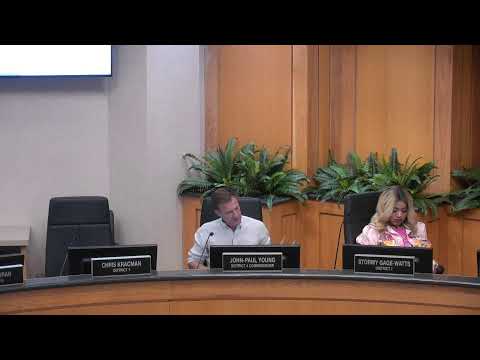
Commissioners raised two specific follow-ups: a previously proposed distribution of STD test kits that Todd said did not launch because it had not received this body's funding, and a request from a commissioner to explore installing a flight simulator at the Harbor for youth exposure to aviation careers. President John Paul Young asked staff to review subcommittee minutes and funding histories and to return with options — including, if needed, a budget amendment.
“We never received the funding from this body,” Todd said about the STD test-kit proposal; commissioners asked staff to track where the item stalled and report back.
The committee applauded the Harbor’s services and suggested more visibility and coordination with schools and community partners to reach families “on the bubble” who need help before problems escalate. Todd asked commissioners to publicize volunteer needs and said the Harbor’s website lists volunteer and program information.
The meeting ended after brief additional discussion and a motion to adjourn was seconded and carried.
Next steps: staff were asked to locate prior subcommittee minutes and follow up on outstanding funding questions for the STD test-kit proposal and to provide cost estimates for potential expansions (additional trainers for vaping prevention, staffing for the studio, and the proposed flight-simulator effort).