Get Full Government Meeting Transcripts, Videos, & Alerts Forever!
Get email alerts on the Budget topic
No spam. Unsubscribe anytime.
PGCPS midyear financial review finds a multi‑million dollar gap; fund balance to be used and spending freezes imposed
Summary
Chief Howell told the board’s budget workgroup that midyear projections widened an expected $50 million shortfall to a roughly $64 million gap (salary lapse and special-education costs), plus $20 million in unexpected costs, leaving an approximate $38 million remaining deficit; the district identified about $46 million in savings, increased planned use of fund balance, and imposed hiring and discretionary spending freezes.
Prince George's County Public Schools officials said on April 1 that the district faces a substantial midyear funding gap and will rely on savings, spending controls and planned use of reserves to balance the current fiscal year.
Chief Howell, speaking at the workgroup, summarized the district’s financial review and said staff initially estimated about a $50 million shortfall related primarily to lower-than-expected salary lapse (fewer vacancies than forecast) and higher special-education contracted services. "We were initially estimating around $50 million shortfall in the August-September timeframe," Chief Howell said, adding that the realized shortfall widened to roughly $64 million after updated cost experience.
Staff also identified roughly $20 million in additional unanticipated expenses—including higher overtime, retirement and benefits costs and elevated utilities—bringing the total gap beyond earlier estimates. The district located about $45.9 million in savings through a combination of central hiring freezes, discretionary spending freezes and other reductions, but Chief Howell said that left an estimated remaining gap of approximately $38 million.
To respond, the district has instituted a central office hiring freeze (while allowing school-level instructional hires and operational positions) and a freeze on non-instructional discretionary spending districtwide. Chief Howell said the district also increased planned use of the fund balance from $95 million to $134 million, which would reduce projected year-end reserves to approximately $77 million and leave little or no unassigned fund balance.
On transportation, staff said a pandemic-era "plus-in" overtime program for bus drivers—designed to compensate drivers who covered multiple routes—added about $2 million when continued through year-end. Dr. Edwards said transportation vacancies are dropping (about 48 vacancies reported last week) and the district expects to reduce reliance on the accelerated overtime program as vacancies fall.
Board members sought clarifications on labor effects and whether unwinding the overtime program could trigger retention problems. Staff committed to follow-up briefings on retirements, labor costs, Medicaid billing, facilities rental revenues and other technical requests.
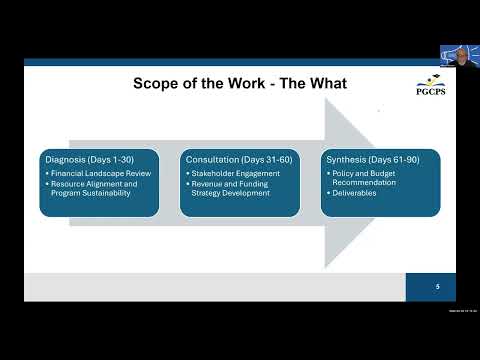
What happens next: The workgroup will form three subcommittees to model fiscal options, identify sustainable revenues, and develop stakeholder-facing policy recommendations; staff will supply a three-page executive summary and follow-up data ahead of the next meeting.