Get Full Government Meeting Transcripts, Videos, & Alerts Forever!
Get email alerts on the Higher Education topic
No spam. Unsubscribe anytime.
UMBC and Salisbury Report Enrollment Recovery, Research Gains and Budget Pressures
Summary
UMBC and Salisbury University briefed the subcommittee on rising applications and undergraduate retention gains, but both said pandemic impacts and some canceled federal research awards have strained budgets; university leaders outlined student‑support and financial‑recovery steps.
Two University System campuses told the subcommittee that enrollment has rebounded after pandemic declines, but both face financial pressures tied to changing student demand and federal grant volatility.
DLS analyst Sarah Baker reported that UMBC’s first‑time applications rose sharply after the pandemic, and continuing undergraduate enrollment increased. UMBC’s president described a focus on a set of "donut‑hole" middle‑income students who fall between Pell eligibility and full‑pay tuition, and outlined steps to support completion: academic advising improvements, financial‑wellness programs, targeted philanthropy and a yearlong student‑success plan intended to raise graduation rates.
UMBC also reported research growth: research awards grew from about $82 million in FY22 to $185 million in the most recent year, despite losing some grants after federal cancellations. The president estimated about $14 million in grants were lost during recent cancellations, but noted nine high‑value awards were later reinstated.
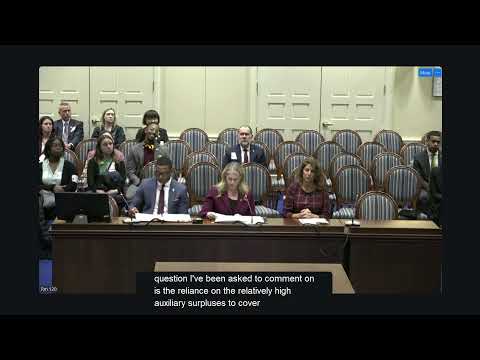
Salisbury University told lawmakers it is marking a centennial year and reported improved retention and graduation metrics; the university acknowledged reliance on auxiliary surpluses to offset Education & General shortfalls in recent years and described accounting corrections and a comprehensive financial recovery plan to realign expenditures with revenues. Salisbury emphasized regional workforce contributions (nursing and teacher training) and ongoing efforts to stabilize its budget while investing in student success.
Lawmakers asked both institutions for follow‑up data on need‑based aid distribution, transfer pathways, grant recompetition, and projections for enrollment and degree production. Both presidents agreed to provide the committee with requested detail.