Get Full Government Meeting Transcripts, Videos, & Alerts Forever!
Get email alerts on the Film Production topic
No spam. Unsubscribe anytime.
Lawmakers Weigh Sunsetting Maryland Film Tax Credit as Commerce Warns of Job Losses
Summary
After DLS recommended sunsetting the film production tax credit, Commerce and industry witnesses said ending the credit would cost Maryland jobs and spending, arguing neighboring states pair incentives with studio investment and aggressive recruitment. Lawmakers pressed Commerce on competitiveness and jurisdictional benefits.
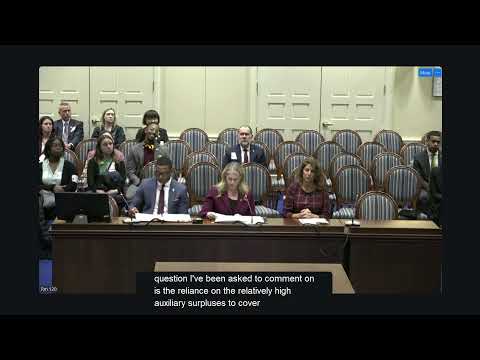
A recommendation from the Department of Legislative Services to end Maryland’s film production tax credit drew sharp rebuttals at the subcommittee hearing, with Commerce officials and film‑industry witnesses saying such a move would blunt a sector that generates local spending and jobs.
DLS reported an interim evaluation that recommended sunsetting the film production activity tax credit. Committee members asked Commerce whether neighboring states’ incentives made Maryland less competitive and whether ending the credit would reduce production activity.
"This is an arms race," Deputy Secretary Steve Rice said when asked to compare Maryland to other states. He pointed to aggressive incentives and studio investments in Georgia, New Mexico and elsewhere and said Commerce plans to be more proactive in recruitment and to reorganize to increase competitiveness. He added the state would aim to emphasize unique Maryland advantages — locations, architecture and workforce — alongside incentives.
Film industry witnesses made a direct plea. Tiffany Zapula, a Maryland set decorator and member of the Maryland Film Coalition, said the program delivers immediate local spending, supports local crews and helps retain talent from state training pipelines such as Baltimore School for the Arts. "Maintaining and consistently funding this program means investing in Maryland’s workforce today and tomorrow," she said.
Commerce argued the credit "pays for itself," citing seven large productions between FY2019 and FY2025 that supported 892 Maryland workers and generated direct state spending and broader economic impact. DLS countered with an evaluation recommending termination, prompting lawmakers to press both sides for more comparative data on neighboring states’ incentives and on which Maryland jurisdictions have benefited most from production.
The hearing did not produce a vote. Committee members requested follow‑up information, including jurisdictional breakdowns of film activity and a clearer accounting of how Maryland’s incentives compare in scale and structure to other states’ packages. Any change to the tax credit would require legislative action.