Get Full Government Meeting Transcripts, Videos, & Alerts Forever!
Get email alerts on the Trail Management Atvs topic
No spam. Unsubscribe anytime.
Lengthy public record on ATV/trail bill exposes north‑south split; committee lays bill over for revisions
Summary
Senate File 12‑45, a bill to unify trail posting rules and add environmental safeguards on state lands, produced extensive testimony both supporting and opposing it. Tribal representatives and conservation groups urged stronger protections; ATV clubs, county officials and northern lawmakers warned of economic and access consequences. The committee laid the bill over for further negotiation.
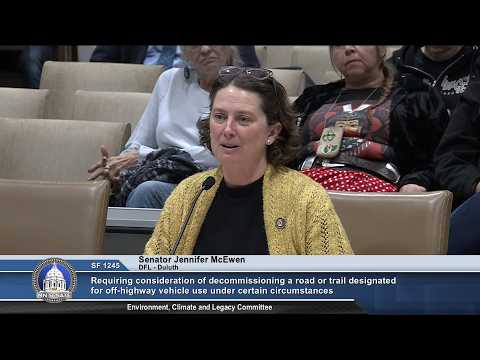
Senate File 12‑45, a proposal to tighten trail management rules on state lands — including requiring designation/posting of ATV trails, buffers near sensitive waters, environmental assessment worksheets for new trails and an agency path to decommission damaged routes — prompted a long, sharply divided hearing.
Sponsors and conservation coalitions said the bill protects wetlands, wild rice areas, cultural resources and wildlife habitat by making the DNR’s trail planning and environmental review processes more robust and by requiring early tribal and local input. Kelly Applegate, a tribal natural‑resource official, and other tribal witnesses described threats to culturally important plants and habitats and supported mandatory consultation.
DNR staff explained current grant‑in‑aid and trail designation processes and warned that the bill would add procedural restrictions and administrative requirements. They urged committee members to consult the DNR’s recently released strategic master plans for trail decisions.
Opponents — including the All‑Terrain Vehicle Association of Minnesota, local county commissioners, business representatives and many northern lawmakers — said the bill’s one‑size‑fits‑all approach would impose heavy signage and maintenance costs on counties and local clubs, reduce recreational access and harm tourism economies that rely on the existing informal network north of Highway 2. Speakers described local practices of using existing logging roads and long‑standing customary routes and urged more local control and funding rather than statewide mandates.
Arguments also focused on a decommissioning petition provision that would allow small groups of residents to trigger reconsideration of a trail; opponents said the threshold invites misuse and administrative burden. Supporters said the decommissioning process provides a safety valve to address environmental harm and called for clearer evidence standards.
Committee members heard repeated calls for further negotiation to reconcile environmental protections with local trail management realities. After extensive testimony and member debate, the sponsor requested and the committee agreed to lay the bill over to continue stakeholder work.