Get Full Government Meeting Transcripts, Videos, & Alerts Forever!
Get email alerts on the Governance topic
No spam. Unsubscribe anytime.
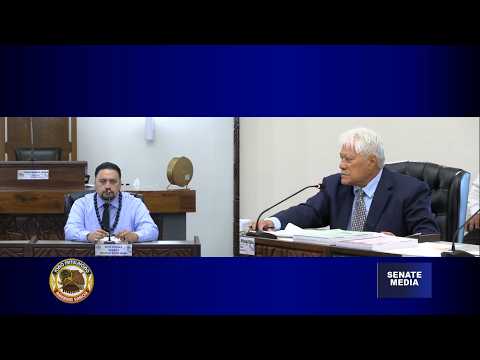
ASPA board appointee Johnson Boyer says he was recess-appointed, declines to discuss former director under legal advice
Summary
Johnson Boyer told senators he was contacted by the governor’s office and given a recess appointment last October; he said he cannot discuss details of the former ASPA executive director’s departure because of legal non-disclosure and non-disparagement restrictions, and he will follow up on senators’ questions about his voting status and local well disputes.
Johnson Boyer, a newly seated member of the American Samoa Power Authority board, told the Senate that the governor’s office contacted him last year and that he accepted an invitation to serve, saying he understood he was given voting rights through a recess appointment in October.
"I was contacted I think in October of last year and extended the invitation to to serve the people of American Samoa on the ASPA board," Boyer told senators. When asked whether he had sought a formal opinion from the attorney general about his voting authority, Boyer said he had not and described the voting-rights understanding as his and the board’s interpretation.
Boyer also declined to discuss the departure of the authority’s previous executive director. He said legal counsel advised the board not to speak about the matter and limited what he could say to a confirmation that the director resigned. "I can only confirm that he did resign. And he did so with his with his integrity intact," Boyer said.
Boyer described his professional background to the committee, saying he brings nearly two decades of engineering experience from the aerospace industry and that he currently works for Boeing. "I bring almost 20 years of engineering experience. Primarily in the aerospace industry. I work for Boeing today," he said, and added that he expects to apply engineering principles from that work to utility management in American Samoa.
Senators pressed for clarity on the appointment process and the legal basis for Boyer’s voting rights; Boyer said he would consult the board and the governor’s office and return to the Senate with further information. He also told senators he would look into specific constituent concerns about water wells and compensation and report back.
No formal action or vote occurred during the session on Boyer’s appointment; the hearing proceeded with questions and follow-up requests to the board.