Get Full Government Meeting Transcripts, Videos, & Alerts Forever!
Get email alerts on the Elections topic
No spam. Unsubscribe anytime.
D.C. council rejects delay to ranked‑choice voting after intense debate
Summary
The D.C. Council declined an emergency proposal to delay implementation of ranked‑choice voting, rejecting a declaration that would have pushed the change beyond 2026. Supporters cited concerns about Board of Elections readiness and outreach to seniors and vulnerable populations; opponents said voters authorized RCV and the board is prepared.
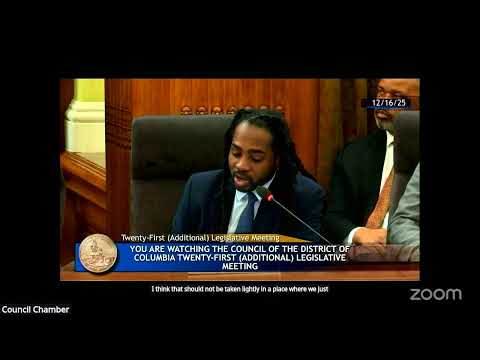
The Council of the District of Columbia voted down an emergency declaration on Dec. 16 that would have postponed the city’s implementation of ranked‑choice voting (RCV) until 2027, after hours of debate over whether the Board of Elections has the time and resources to educate voters and run the new system.
Supporters of the delay, led by Council Member Anita Bonds, argued the Board of Elections had not yet demonstrated a comprehensive, equity‑centered outreach and training plan for seniors, voters with limited English proficiency, incarcerated residents and other groups that advocacy groups said require targeted education. Bonds said the agency had signaled it might be “set up for failure” if forced to deliver a full RCV rollout between January and June 2026 and urged colleagues to give the board additional time and funding.
Opponents — including Council Members Zachary Parker, Jack Allen and others — countered that RCV was enacted by voter initiative in 2024, that the council allocated funding for implementation in the budget, and that board leadership had repeatedly said it could stand up the system for a June election. Several speakers said delaying the change would override the will of voters and inject uncertainty into active campaigns and planning already under way.
The motion to adopt the emergency declaration failed on a roll call, 5 yes to 8 no. Supporters who voted yes included Council Members Bonds, Felder and McDuffy, while a majority of council members voted no. The vote means RCV implementation timing remains unchanged by council action; the Board of Elections and stakeholders will continue to prepare for deployment under the current schedule.
The debate highlighted three recurring concerns: whether the Board of Elections has a finalized implementation plan and adequate staff and vendor agreements; whether funding to conduct inclusive voter education is sufficient; and whether compressed timelines will leave historically under‑served voters behind. Several council members called for coordinated outreach involving community groups, candidates and the board rather than a unilateral delay.
The council’s action was procedural: it rejected an emergency declaration request and did not change the law or the initiative that voters approved in 2024. Next steps will be driven by the Board of Elections’ internal planning, any further budget requests the agency makes, and ongoing oversight by the council.