Get Full Government Meeting Transcripts, Videos, & Alerts Forever!
Get email alerts on the Public Safety topic
No spam. Unsubscribe anytime.
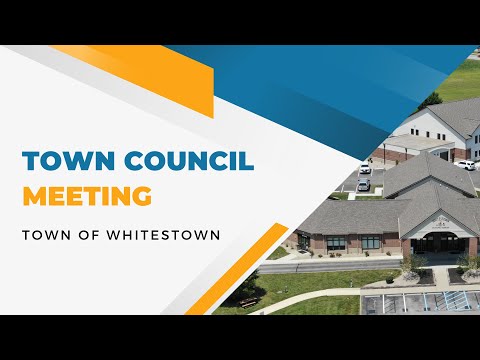
Council approves zoning change for Whitestown training facility after neighbors raise noise concerns
Summary
The council rezoned roughly 38.6 acres for a Whitestown public-institution training facility that includes K9, EMS and training components and a 6-acre firearms range. Neighbors raised noise and buffer questions; chief and staff said berming, vegetation and suppressed weapons are planned and committed to further mitigation if monitoring shows issues.
The council adopted ordinance 2026-12 to change zoning on approximately 38.6 acres from Agricultural to Public Institution for a proposed Whitestown Training Facility. The plan commission had sent a favorable recommendation; the ordinance passed on a council vote recorded as carrying 5-0.
Neighbor Matt Cumins, who owns adjacent property, told the council he supports training needs but expressed concern that discussion had focused almost exclusively on a firearms range (roughly six acres of the 38.6) rather than a broader, ground-level plan for the site. Cumins asked that the council and staff define noise standards and mitigation measures in the record. He noted the recent county ditch/tree clearing had removed a partial vegetative buffer and asked for clear, measurable noise limits or a mitigation plan if range sound reached neighboring properties.
Chief of police/fire (presenting on facility uses) and staff responded that the facility’s early phases include a firearms range and K9/training areas, and that many mitigation steps are anticipated: depressed range design intended to direct sound, use of suppressors where lawful, and potential construction of berms or engineered material stacks (BMS) using excavated fill from other town projects. The chief emphasized a phased, multi-year buildout with no immediate large-scale construction beyond the initial range and training elements; staff said some land along the property is floodplain or otherwise unbuildable and that the full build-out could take 15–20 years.
Council members sought assurances that the town would be a good neighbor, asked for post-construction sound monitoring and committed to revisiting mitigation if decibel measurements show impacts to nearby residents. Staff also said vegetation and additional berming could be added later as necessary. The council adopted the rezoning to a public-institution district (vote recorded 5-0).