Get Full Government Meeting Transcripts, Videos, & Alerts Forever!
Get email alerts on the Biometric Data topic
No spam. Unsubscribe anytime.
Teamsters and ACLU urge limits on employer use of biometric truck cameras; bill laid over
Summary
Jacob Clauser and the ACLU told the Judiciary Committee HF4005 seeks safeguards for workers’ biometric data after county plow‑truck cameras were deployed; authors said the bill focuses on storage and access rules. The committee laid the bill over for further work.
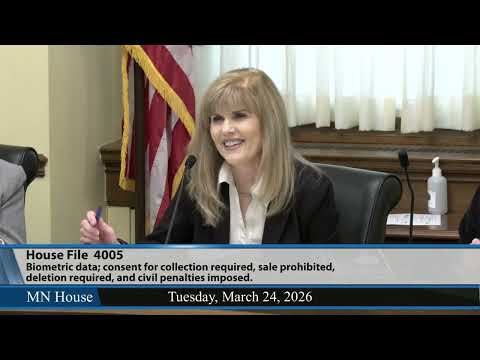
Representative or loss introduced House File 4005, which would regulate collection, storage and access to biometric data, including data produced by driver‑facing cameras and AI analytics used by some county fleets.
Jacob Clauser, a Teamsters steward from St. Louis County, said management installed forward‑ and driver‑facing cameras in plow trucks without clear explanation of capabilities. "It was only then that I learned the true biometric capabilities," Clauser said, describing AI that measures driver movement and uses facial measurements to identify drivers. He testified that disclosure and retention rules in contract language are needed so workers are not exposed by inappropriate data access.
John be learned, policy counsel at ACLU Minnesota, urged support for the bill and pointed to other states that have passed biometric protections. He said biometric identifiers are unique and, if exposed, cannot be changed like a password, increasing identity‑theft risk.
Members asked how a person is defined in the bill and whether the definition would include governments and nonprofits; nonpartisan staff (Mr. Hopkins) explained Section 6 uses the broad statutory definition in chapter 645. Nonmembers and members also raised questions about federal exceptions and how existing federal law treats body‑worn camera data.
The committee laid HF4005 over for further stakeholder work and possible drafting changes.
Next steps: sponsors and stakeholders agreed to refine definitions and retention/access language before the bill returns to committee.