Get Full Government Meeting Transcripts, Videos, & Alerts Forever!
Get email alerts on the Gambling Regulation topic
No spam. Unsubscribe anytime.
Senate committee moves to close online 'sweepstakes casino' loophole; industry urges more study
Summary
The committee recommended SF 4474 to ban online sweepstakes that operate as casino-style gambling; tribal gaming groups, charities and veterans organizations supported the measure for consumer protection and to protect tribal/state revenue, while social‑gaming companies cautioned it would push players offshore and asked for a regulatory framework instead of an outright ban.
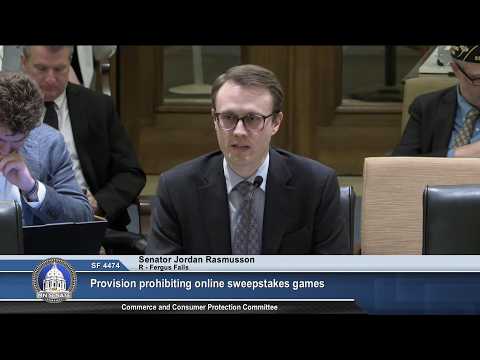
Senate File 4474 passed a committee motion March 24 to recommend the bill to Judiciary after extensive testimony about online dual‑currency sweepstakes that critics call de facto online casinos.
Sponsor Sen. Rasmussen said the bill would clarify Minnesota’s sweepstakes law to prevent companies from using a dual‑currency model (free coins plus a second redeemable “sweep” currency) to enable real‑money casino games such as slots and blackjack without state authorization. Proponents — including tribal gaming representatives, charities and veterans’ groups — told the committee the sites undercut regulated operators and lack consumer safeguards.
Andy Cano, CEO of a social‑gaming firm headquartered in Minnesota, said reputable companies comply with geo‑location, age checks and alternate free-entry methods and warned the bill could drive users to unregulated offshore operators that offer fewer protections. “If this bill is passed, it will not eliminate this activity — it will push Minnesotans to offshore operators,” he said.
Opponents from the social‑gaming industry asked the committee for more time to craft a modern regulatory and tax framework that would protect consumers while keeping accountable operators in state. Supporters pushed back, citing documented consumer‑protection gaps and urging the committee to act quickly to close the loophole.
The committee adopted a motion to recommend SF 4474 to the Judiciary Committee and several proponents pledged to continue stakeholder conversations with industry representatives to refine enforcement tools and statutory language.