Get Full Government Meeting Transcripts, Videos, & Alerts Forever!
Get email alerts on the Anonymous Threat Reporting topic
No spam. Unsubscribe anytime.
Senators debate statewide anonymous threat reporting bill, focus on triage, data security and funding
Summary
Senate File 39,83 would authorize districts to adopt the Department of Public Safety's statewide anonymous threat reporting system or certified local systems meeting prescriptive standards (24/7 staffing, behavioral threat assessment teams, public education); witnesses urged immediate school notification, data safeguards, and funding for staffing and training; committee laid the bill over for further work.
Senate File 39,83 would give school districts the option to use the Department of Public Safety's statewide anonymous threat reporting system or to implement a local system that meets detailed requirements, including 24/7 staffing by trained personnel, evidence‑based intervention and triage, behavioral threat assessment team involvement, public education about the system, and FERPA‑compliant data handling.
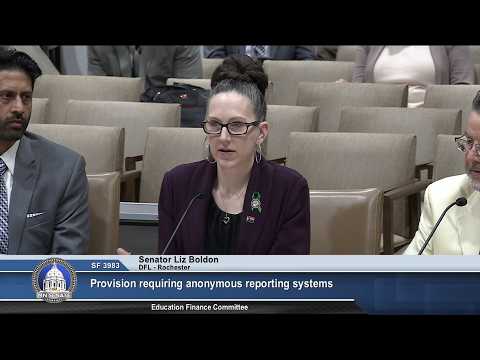
Senator Bolden said anonymous reporting systems are an "essential" tool to stop violence before it occurs, acknowledging that anonymity can reduce cultural reluctance to report. Testimony from school‑safety and association witnesses emphasized that the platform is only as effective as what happens after a tip: immediate, coordinated notification to school officials and trained responders is critical. One presenter highlighted a recent national breach of an anonymous reporting vendor and urged strong statewide standards for data security.
The Minnesota Department of Education representative said the department supports development of such a framework but noted that the bill as drafted does not fully account for the resources required for rigorous data collection, evaluation, technical infrastructure, training and communication. Multiple senators asked whether the state system has capacity to handle every district; witnesses said BCA and other partners have been engaged and that economies of scale favor a consolidated, well‑resourced statewide option.
Committee members flagged the bill's language tension between "encouraged" and the later use of "must" in prescriptive requirements and asked whether districts could implement partial systems without being forced later into full compliance. Sponsors said the intent is to support adoption while ensuring core elements are present so systems actually work. The committee laid the bill over for further drafting and to address funding and notification issues.