Get Full Government Meeting Transcripts, Videos, & Alerts Forever!
Get email alerts on the Legislative Roundup topic
No spam. Unsubscribe anytime.
Judiciary committee advances preliminary language reviews on multiple bills, flags fiscal and drafting issues
Summary
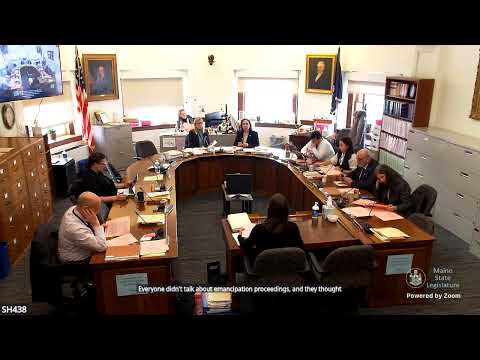
In addition to two FOA reviews, the committee conducted language reviews of several bills (LD 1911, LD 395, LD 785, LD 2150, LD 2219, LD 2106, LD 2163, LD 2194), advanced most as committee reports or favorables and flagged drafting clarifications and a contested fiscal note for LD 2150.
Beyond the two FOA reviews, committee staff led a series of preliminary language reviews and majority/minority report discussions on an array of bills.
Key items and committee rulings: • LD 1911 (automatic sealing language): Minor language edits discussed; staff presented Maryland‑style language that will be refined (SEG 2636–2666). • LD 395 (Wabanaki nations working group): Committee reviewed a unanimous working‑group resolve creating a legislative working group to examine extension of federal beneficial laws to the Wabanaki nations, discussed the emergency preamble wording and the working‑group definition of “consensus,” and agreed staff should refine the preamble language (SEG 2678–3062). • LD 785 (implement task‑force recommendations): Staff presented negotiated language on tribal representation, manufactured‑housing sales exemptions, sales‑tax sourcing to tribal parcels (rulemaking to identify up to one parcel per nation), and a property‑tax exemption timed to April 1, 2027; sponsors signaled support (SEG 3078–3364). • LD 2150 (procedures for restricting access to state property/services): Committee reviewed a majority amendment establishing notice, APA review and a data‑collection requirement; members questioned a fiscal note that would fund a part‑time assistant attorney general; the committee agreed to advance the language but not to include the appropriations/allocations in the amendment and left resolution of the fiscal note to the sponsor and AFA (SEG 3366–3748). • LD 2219 (right‑to‑know housekeeping): Committee removed a contested section after department concerns and advanced the remaining update language with no fiscal impact (SEG 3961–3990). • LD 2106 (consent for entry and protected records): Majority report adopted; fiscal implications noted but not yet specified (SEG 4002–4021). • LD 2163 (victim rights — notice/opportunity to be heard): Majority report favors enhanced notice for subpoenas of third‑party records; a single‑member minority proposal to expand notice to certain medical‑record requests would carry an AG office fiscal note if adopted (SEG 4027–4140). • LD 2194 (indigent legal services / court‑appointed counsel): Committee refined definitions of Fifth Amendment counsel and clarified proceedings included; fiscal transfer language was discussed (SEG 4143–4219).
Why it matters: The round of language reviews advances multiple policy areas — from criminal records sealing and tribal tax/treatment questions to access‑restriction procedures and victims’ procedural rights. The committee’s careful handling of drafting nuances, emergency preambles and contested fiscal notes is typical at this stage and signals where sponsors and departments must focus further drafting and budget work.
Next steps: Sponsors will continue negotiations and work with staff (including AFA where fiscal notes are contested); committees of jurisdiction will receive the Judiciary Committee’s reports and recommendations for subsequent action.