Get Full Government Meeting Transcripts, Videos, & Alerts Forever!
Get email alerts on the Administrative Procedure topic
No spam. Unsubscribe anytime.
Committee urges changes to bill on code‑enforcement complaints; recommends confidentiality until adjudicatory hearing
Summary
After extended debate, the Judiciary Committee recommended that language in LD 2097 be revised so complaints and investigation materials about certified code‑enforcement officers remain confidential until an adjudicatory hearing, while keeping final hearing decisions public. The committee voted unanimously to send that recommendation to the committee of jurisdiction.
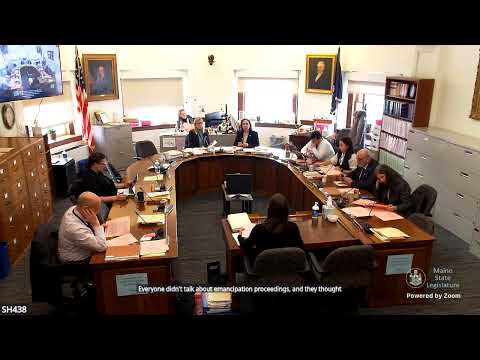
The Judiciary Committee spent a substantial portion of its May 14 session on LD 2097, a bill to move code‑enforcement investigation and certification oversight to the Maine Office of Community Affairs (transcript shorthand used: "Mocha") and to establish confidentiality rules for complaints, investigations and disciplinary reviews.
Representative Tracy Gear (sponsor for the Housing & Economic Development committee) described the bill's goal: provide a statutory home for certification reviews, a process for investigations and the tools to retain certified inspectors, while balancing public access and confidentiality. Janet (committee staff) walked members through proposed sections (4551‑G and new 4451‑H) and appended statutory rubrics that the bill was modeled on.
Witnesses and department representatives noted two existing models: the criminal justice academy rubric (more public disclosure) and the municipal/state/county‑employee rubric (investigations confidential until a final decision imposing discipline). Director Samantha Horn and others recommended modeling on the criminal justice approach but flagged that many code enforcement certificate holders are municipal employees whose employment‑discipline statutes differ.
Members zeroed in on a recurring policy tension: under the draft, only complaints that "may result in suspension or revocation" would be confidential, which could leave minor or unfounded complaints permanently public. Several legislators argued that making minor, unfounded or nuisance complaints public could chill recruitment and unfairly harm inspectors.
Representative Adam Lee moved that the committee conclude the draft as written is not narrowly tailored and does not adequately protect individual privacy interests; the motion recommended that the committee of jurisdiction consider revising the statute so that complaints and supporting materials be confidential until an adjudicatory hearing, with final adjudicatory decisions (whether favorable or unfavorable) remaining public. Senator Talbot Ross seconded the motion; the committee approved it unanimously of those present.
Why it matters: The bill affects the careers and reputations of certified code‑enforcement officers and third‑party inspectors statewide and shapes how municipalities and the state will manage complaints, remedial training, consent agreements and disciplinary processes. The committee’s recommendation steers the bill toward a confidentiality regime that mirrors other personnel‑type statutes while preserving public reporting of final adjudicatory outcomes.
Next steps: The committee of jurisdiction (Housing & Economic Development) will receive this committee’s recommendation and may revise the bill language, consider adopting municipal‑style confidentiality language, or retain the criminal‑justice model adjusted to cover all complaints in a consistent manner. The chairs signaled the committee of jurisdiction could take up the suggested changes again at its next meeting.