Get Full Government Meeting Transcripts, Videos, & Alerts Forever!
Get email alerts on the Freedom Of Access topic
No spam. Unsubscribe anytime.
Judiciary committee approves IF&W public‑records exception, sets 100‑year archival retention
Summary
The committee approved LD 2236, a bill to tighten privacy protections for personally identifiable information held by the Department of Inland Fisheries and Wildlife while allowing release of non‑identifiable data and limited name+mailing‑address lists; the committee also set a 100‑year archival retention period. (Motion made by Rep. Elizabeth Caruso; unanimous of those present.)
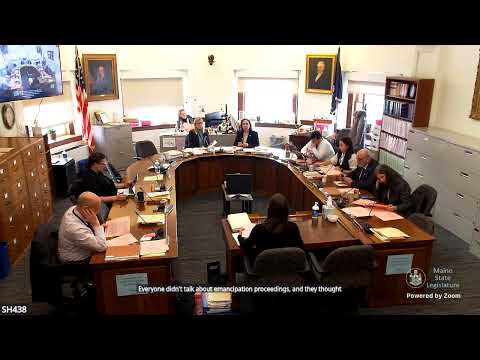
The Joint Standing Committee on the Judiciary on May 14 reviewed LD 2236, an omnibus bill revising public‑records rules for the Department of Inland Fisheries and Wildlife (IFNW), and approved the FOA exception with an amendment setting archival retention to 100 years.
Janet, committee staff, framed the bill as a comprehensive public‑records access measure for IFNW, saying the package “is about public records access” and that it reforms how personally identifiable information (PII) is defined and treated. Crystal Tero, legislative liaison and FOA coordinator for IFNW, told the committee the bill separates non‑commercial records (personal licenses, harvest records) from commercial records (guide services) and enumerates PII — including Social Security numbers, driver’s license numbers, dates of birth and taxpayer IDs — that would be confidential while non‑identifying statistical data could be released.
Tero said the bill also covers ATV and snowmobile accident reports and mirrors existing Title 29A motor‑vehicle accident‑report confidentiality for the IFNW database. She described restrictions on admissibility and noted an exception allowing disclosure of date, time, location and names by a game warden colonel in limited circumstances. Committee members pressed on details including how mailing addresses would be treated, whether a request for aggregated age ranges could be satisfied without releasing full dates of birth, and the department’s use of an outside data host (Inform) and fees for database extracts.
Representative Elizabeth Caruso moved that the proposed public‑records exception meets Title 1, section 434 and that the Judiciary Committee approve the language, with a recommendation that records be transferred to the State Archives for permanent retention for 100 years. The motion was seconded by Representative Sto and carried unanimously of those present.
Why it matters: The bill aims to protect individuals from identity theft and misuse of sensitive IFNW records while preserving public access to aggregated data useful for wildlife management and research. It also clarifies the department’s authority to charge reasonable fees for database requests and contemplates rulemaking for fee schedules. The committee’s archival decision extends confidentiality protections well beyond the department’s minimum electronic retention period (noted in committee materials as a 10‑year minimum).
Next steps: The committee approved the FOA recommendation with the 100‑year retention suggestion and sent the committee report forward for the committee of jurisdiction and further drafting and review. The department and stakeholders will have the opportunity to refine fee schedules and final wording during the next drafting steps.