Get Full Government Meeting Transcripts, Videos, & Alerts Forever!
Get email alerts on the Behavioral Health topic
No spam. Unsubscribe anytime.
Senate panel advances DHS behavioral-health bill after technical fixes and new tobacco-education documentation
Summary
The Senate Human Services Committee recommended SF 47.26 to pass after adopting an author’s amendment. DHS said the bill makes statutory cleanups, tightens peer-recovery oversight and requires SUD and mental health programs to document provision of tobacco- and nicotine-education materials; the changes expand utilization-management reviews tied to the federal 11/15 waiver.
A Minnesota Senate committee on Monday recommended passage of SF 47.26, a Department of Human Services behavioral-health policy bill that makes technical statutory cleanups, adds oversight steps for peer-recovery services and requires programs to document tobacco- and nicotine-education given to patients.
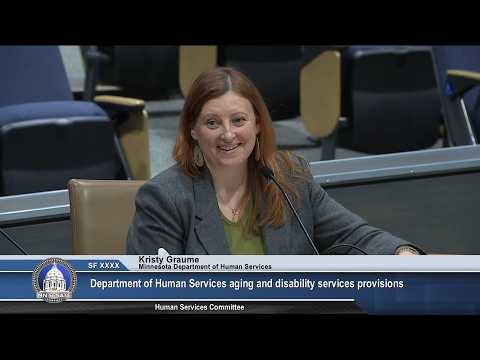
DHS staff described the bill and an author’s A1 amendment, which the committee adopted before the substantive discussion. "For the record, my name is CHRIS TO GRANDMA and I'm with the Department of Human Services," said CHRIS TO GRANDMA, who walked members through the amendment and the bill’s SUD-related sections.
Why it matters: committee members said the law-language changes are intended to preserve Minnesota’s ability to participate in the Section 11/15 SUD waiver, which allows the state to draw federal matching dollars for treatment even when services are delivered in institutes for mental disease. DHS told the committee it added utilization-management review requirements for up to 10% of medical-assistance or behavioral-health claims and extended that review to comprehensive assessments, treatment coordination and adolescent treatment services to strengthen program integrity.
Key provisions and clarifications from DHS included technical citation updates for peer-recovery services, removing limits that had confined supervision of peer-recovery staff to a narrow class of clinicians, and expanding who may supervise peers to include additional licensed professionals. DHS also proposed a new documentation requirement that SUD and mental-health providers record that tobacco-education materials were provided at admission so the department’s licensing and oversight functions can verify compliance.
Senators asked whether these changes reduce or expand existing utilization review. "We are not cutting back on utilization review," said CHRIS TO GRANDMA, explaining that some earlier placement-focused language was removed because direct access has changed placement practices, and that utilization-management requirements are being relocated and expanded elsewhere in statute to be more comprehensive.
Members also pressed DHS about whether the bill would help the state address a federal CMS review that has held back federal Medicaid funds. Senators referenced a reported CMS freeze of roughly $500 million pending corrective action. DHS responded that CMS recently approved a corrective-action plan and that many elements of the plan are already being implemented; DHS said the bill contains program-integrity pieces but that additional legislation and administrative work are addressing the larger CMS requirements.
What the committee did: after discussion and questions, the committee voted by voice to recommend SF 47.26, as amended, be passed and referred to the Committee on Health and Human Services.
What’s next: the recommendation sends the bill forward for further consideration; DHS and providers will continue to implement and clarify the statutory language if the bill becomes law.