Get Full Government Meeting Transcripts, Videos, & Alerts Forever!
Get email alerts on the Education Omnibus Sf 3870 topic
No spam. Unsubscribe anytime.
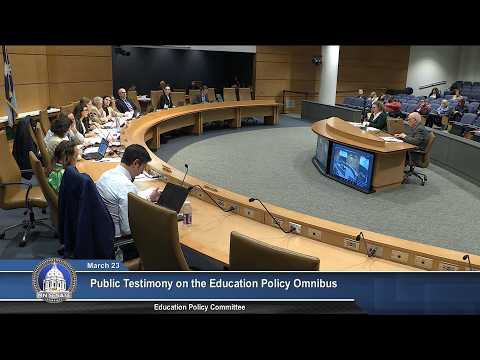
Senate education committee walks through SF 3870 omnibus; bill laid over for markup after hours of testimony
Summary
The Minnesota Senate Education Policy Committee walked through the omnibus education bill SF 3870 on March 23, 2026, heard extensive testimony from students, educators and advocates on literacy, safety and dual‑credit issues, adopted technical amendments by voice vote and laid the bill over for Wednesday markup.
The Minnesota Senate Education Policy Committee conducted a detailed walk‑through of the education omnibus, Senate File 3870, on March 23, 2026, and laid the bill over for markup after extensive testimony from students, educators and advocacy groups.
Chair and bill sponsor Senator Make Way moved SF 3870 before the committee and presented the A3 amendment; committee members adopted the amendment by voice vote and agreed to carry the bill forward to a formal markup session scheduled for Wednesday. Committee staff then summarized all articles of the bill, including provisions that would codify federal protections for students experiencing homelessness and migratory status, expand literacy‑focused training and screening, change terminology from “mental illness” to “mental health,” and incorporate an interstate teacher mobility compact.
Commissioner Willie Jett of the Minnesota Department of Education told the committee the bill “codifies federal protections” and thanked lawmakers for including measures aimed at student stability and accountability. “These students often experience significant instability,” Jett said, urging continued collaboration on language and technical clarifications.
Student witnesses emphasized experiences with career and pathway programs, counseling needs and school climate. Natalia Yuriko, a Minnetonka High School junior, said the mentorship from a Minnesota senator and participation in the Vantage Advanced Professional Studies public‑policy strand shaped her education and called for licensed mental‑health professionals in every school building. Benjamin Howard of Rochester described the value of clubs and fundraising that engages students across the district.
Advocacy groups and sector representatives testified on targeted sections. The Minnesota Association of Charter Schools supported charter accountability measures but warned of funding inequities for charter operators. Library advocates asked the committee to act on equitable e‑book licensing; several higher‑education and student speakers warned that proposed language on dual‑credit (PSEO) course alignment and district review could create additional barriers unless amended.
Committee members asked for additional data and clarifications. Staff said the bill’s dual‑credit sections would require districts to notify students within 15 days if a college course would not meet a high‑school graduation requirement and would create an appeal to the commissioner; staff offered to provide data on how often districts have denied credit after students complete college courses.
The committee limited testimony times for the day and encouraged organizers to submit materials electronically. With the A3 amendment adopted and the bill laid over, the committee will convene again for formal markup and potential further amendment.
The committee adjourned with instruction to submit amendments ahead of Wednesday’s session.