Get Full Government Meeting Transcripts, Videos, & Alerts Forever!
Get email alerts on the Workforce Caregiving topic
No spam. Unsubscribe anytime.
Committee refers bill to exempt solo caregivers from new meal and rest‑break rules, sponsors say safety motivates change
Summary
Lawmakers and provider advocates told the House Human Services Finance and Policy Committee that a narrow exemption to Minnesota’s new meal and rest‑break standard is necessary for staff who work alone with vulnerable adults; the committee voted to refer House File 4110 to a different committee for further review.
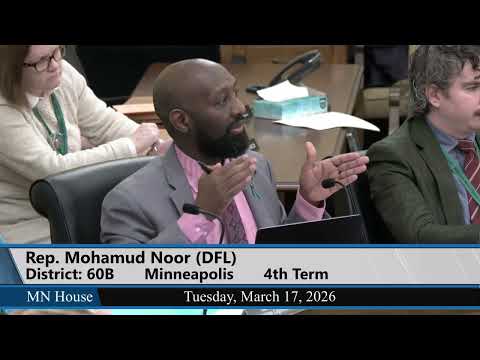
House Human Services Finance and Policy Committee members on the committee’s March agenda referred House File 4110, a bill that would create an exemption to newly enacted statewide meal and rest‑break requirements for employees who work alone with vulnerable adults or children.
Sponsor remarks and provider testimony framed the bill as a narrow, safety‑focused change. The sponsor said the bill is meant to allow front‑line caregivers who must remain available to respond to emergencies to take short, informal rests during natural lulls in supervision without leaving vulnerable people unattended.
Sarah Grafstrom, who identified herself for the record as “senior director of state and federal policy,” testified in support and described typical staffing in community residential homes: one staff member often supports one to four residents on an eight‑hour shift. “The meal and rest breaks standards that were passed in the last session require a 15 minute break for every 4 hours worked and a 30 minute paid off‑the‑clock break for every 6 hours worked,” Grafstrom said, and added that enforcing a prescriptive off‑site break in one‑staff settings could “jeopardize the safety and well‑being of the individuals.”
Representatives from the Long‑Term Care Imperative—Shelly Botkin and Nicole Mattson—also testified that 24/7 operations, weather, staff illness and other disruptions can make uninterrupted, scheduled breaks impractical in some homes. They urged a limited exemption that preserves employees’ opportunities for downtime when it is safe to do so.
Committee members questioned how missed breaks are recorded and whether employees would receive additional compensation when they cannot take an unpaid meal break. Testimony from providers and the sponsor repeatedly emphasized that staff are paid for their full shifts in many facilities and that the measure does not authorize walking away from residents; instead, it seeks to allow staff to remain on site and available while using short rest opportunities.
After discussion, the sponsor moved to refer HF4110 to the Workforce, Labor, Economic Development, Finance and Policy Committee. The motion was approved by voice vote and the file was referred for further consideration.
The committee did not adopt amendments to HF4110 during the hearing; members asked staff and agencies for technical assistance and flagged follow‑up questions about interactions with collective bargaining agreements and the recording of missed breaks.