Get Full Government Meeting Transcripts, Videos, & Alerts Forever!
Get email alerts on the Utility Regulation topic
No spam. Unsubscribe anytime.
Fresh Energy and Commerce urge sunsetting Minnesota gas infrastructure cost-recovery rider; utilities and unions push to keep it
Summary
On March 17, the Senate Energy Committee heard competing testimony on extending a gas infrastructure cost-recovery rider: consumer advocates and the Department of Commerce urged letting the rider expire to preserve ratepayer oversight, while gas utilities and unions said it funds safety-driven work. The bill was laid over for further negotiation.
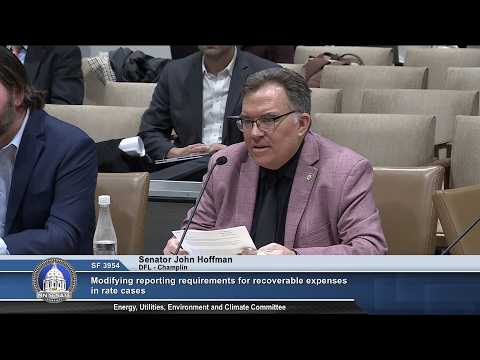
ST. PAUL — Lawmakers and witnesses sparred March 17 over whether Minnesota should extend an automatic gas infrastructure cost-recovery rider that allows utilities to recover certain safety- and integrity-related spending outside a full rate case.
Fresh Energy and the Minnesota Department of Commerce urged the Senate Energy, Utilities, Environment and Climate Committee not to make the rider permanent, arguing the mechanism short-circuits the more robust scrutiny provided in litigated rate cases and can accelerate spending at a time of uncertainty about the future size and cost of the gas system. “Fresh Energy recommends that the gas utility infrastructure costs rider be sunset,” said Caitlyn, representing Fresh Energy. Sydney Lee, assistant commissioner for regulatory affairs at the Minnesota Department of Commerce, testified the Department “believes the riders should not be extended” and favors reviewing major infrastructure spending through full rate cases so intervenors and the public can better assess bill impacts.
Utility witnesses and labor representatives countered that the rider is narrowly tailored to safety and federally mandated integrity work — not capacity expansion — and that it enables timely recovery of investments needed to protect customers and to allow coordinated public-works projects to proceed. An Xcel Energy gas operations director told the committee the rider covers work tied to federal pipeline-safety requirements and routine integrity management; he described the mechanism as “an administrative tool for timely recovery of safety investments.” Jamie Fitski, director of government affairs for CenterPoint Energy, said the rider’s “scope of projects ... is extremely narrow” and subject to regulatory scrutiny. Kevin Prats, a labor representative, said the rider has funded critical infrastructure projects and characterized its purpose as safety and public-works accommodation.
Committee members pressed witnesses about transparency, referencing a recent debate in Colorado over a similar mechanism and asking why Minnesota’s approach should differ. The Department of Commerce warned that riders provide less time for expert analysis and lack the full evidentiary review of a rate case. Utility and labor witnesses said the rider allows timely compliance with mandatory relocations and safety mandates and that, historically, utilities used the rider to recover infrastructure investments without what they described as widespread misuse.
The committee did not take a final vote. Chair France said lawmakers would continue negotiations with the House and other stakeholders; the bill (SF 39 54) was laid over for further consideration.
Why it matters: The rider affects how quickly utilities can recover the costs of safety-driven fixes and how much detail ratepayers and intervenors see before costs are recovered. Proponents say the rider preserves prompt safety compliance; opponents say it reduces transparency and the chance for comprehensive review through rate cases.
What’s next: Committee leaders said they will continue discussions with the other legislative body about whether to move the item as a standalone bill or as part of an omnibus package.