Get Full Government Meeting Transcripts, Videos, & Alerts Forever!
Get email alerts on the Professional Regulation topic
No spam. Unsubscribe anytime.
Split testimony as Maine committee hears plan to merge MD and DO licensing boards
Summary
At a public hearing on LD 2233, supporters said a combined medical board would improve licensing consistency and staff support, while osteopathic organizations warned the merger could dilute DO-specific oversight, burden osteopathic regulation and raise fees; the committee took no immediate vote and requested follow-up work-session materials.
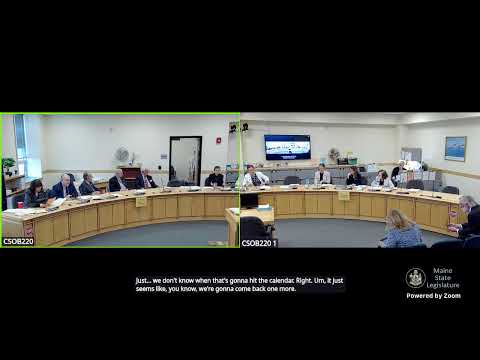
The Joint Standing Committee on Health Coverage, Insurance and Financial Services heard hours of testimony on LD 2233, a bill to combine Maine's Board of Licensure and Medicine and Board of Osteopathic Licensure into a single medical licensing board.
Proponents, including members of both boards and association representatives, told the committee the merger would streamline licensing, provide additional staff and preserve public protection. Tim Teranova, executive director of the Board of Licensure and Medicine, said the two boards formed a joint work group that produced a draft statute and a timeline, and estimated one-time preparatory costs of "approximately $200,000," which the boards' reserves could cover if allocated. Paul Vincel, an osteopathic physician who served on the DO board, testified that "it makes sense to combine the two licensing board into a single board" and argued both professions follow common ethical and professional standards.
But national and state osteopathic groups urged caution. Bruce Wolf, representing the American Osteopathic Association, told the committee that merging the boards risks weakening osteopathic-specific oversight because DOs receive additional training in osteopathic manipulative treatment and have distinct standards. Wolf said a merged board might be forced to divert time to issues unique to MD licensure — for example, licensing of internationally trained physicians — "ultimately slowing services to the detriment of DOs and patients." The National Board of Osteopathic Medical Examiners and other witnesses also warned the DO licensing board has been financially self-sustaining and that merger could lead to higher fees for osteopathic physicians.
Several witnesses, including representatives of the Maine Medical Association and the Maine Association of Physician Assistants, endorsed the merger so long as statutory language preserves separate investigative and adjudicatory panels and guarantees equal representation. Board chairs and public members emphasized the draft statute's requirement that a merged board include equal numbers of osteopathic and allopathic physicians and that committees be structured so osteopathic complaints are reviewed by DO peers.
Committee members asked for clarifications about the draft statute, including how leadership elections would be scheduled and how the merger's fiscal impact would be handled. The hearing concluded with the committee asking for follow-up materials and placing the bill on the work-session docket for additional review. No committee vote was taken on LD 2233 at this meeting; the committee closed the public hearing and moved on to other business.
Why it matters: licensing boards set rules that affect who may practice medicine, how complaints are examined and which professional standards govern discipline. Proponents say a single board can reduce duplication and improve resources for oversight; opponents counter that distinct disciplinary expertise and local DO governance could be lost unless statutory protections are explicit.
The next step: committee members asked that staff supply written clarifications and redrafts addressing questions raised during the hearing, and the matter will be revisited at a future work session.