Get Full Government Meeting Transcripts, Videos, & Alerts Forever!
Get email alerts on the Student Supports topic
No spam. Unsubscribe anytime.
Marshall Public Schools outlines chemical preassessment team process to support students
Summary
District staff described the purpose, membership, confidentiality rules and typical steps of chemical preassessment team meetings, and said some follow-up services are grant-funded though community providers can be difficult to access.
The Marshall Public School District heard a presentation on its chemical preassessment team at the board's regular meeting, where the presenter described how the team evaluates needs and coordinates supports for students with suspected chemical use.
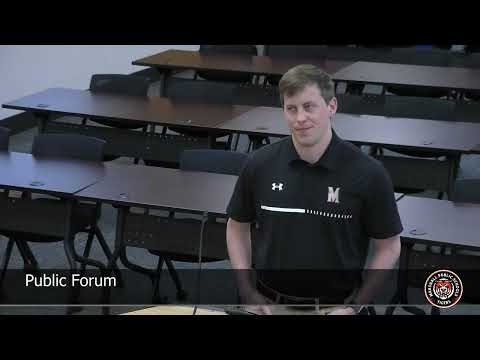
The presenter, introduced in the transcript as Mr. McKitrich and later addressed as Hayden, said the district operates preassessment teams under state law (cited as '1218.26 school preassessment teams') and that the meetings are intended to determine how the school can assist students and families rather than to punish them. He said meetings emphasize confidentiality and a nonjudgmental approach.
Hayden described the range of meeting types and participants: smaller school-based meetings, larger staff meetings, and 'community connect' sessions for the highest-need cases. Typical participants include an administrator, school counselor, classroom teacher, school nurse, the school resource officer, a licensed alcohol and drug counselor (cited in the transcript as Sam Anen), probation officers, county social services and outside therapists when relevant. He said the goal is to bring relevant expertise while reducing the chance that a student will feel overwhelmed by too many unfamiliar adults.
The team's process, as summarized by Hayden, begins with introductions and an opportunity for the student to describe what happened and for parents to share their perspective; the team then reviews assessment data such as academic performance, attendance and behavioral reports and discusses supports ranging from school-based tutoring to referrals to mental health or chemical-health services. He said the meeting is intended to help coordinate supports and next steps with families.
Board members asked whether external behavioral-health services are free or present a barrier for families. Hayden said some services are grant-funded and the district's LAC (Sam Anen) provides services to the middle and high school under grant support; he cautioned that community providers can be busy and that access can be limited even when services exist. In response to whether incidents that occur outside school grounds are handled, Hayden said such cases are typically referred to the school and the district may convene supports at the start of the school year or when appropriate, but that most reported incidents occur during the school day.
Hayden also said the district has discussed with county partners when to report incidents externally versus handling them internally, and that youth use of nicotine and THC has been a growing issue locally; he added that alcohol incidents are treated more severely. Board members thanked Hayden for the overview and the presentation closed.
The board did not take formal policy action on the presentation itself; the meeting moved on to approval of the consent agenda and other action items.