Get Full Government Meeting Transcripts, Videos, & Alerts Forever!
Get email alerts on the Land Use Annexation topic
No spam. Unsubscribe anytime.
Kokomo council approves annexation and heavy‑industrial rezoning for 700‑plus acres after heated public backlash
Summary
The Kokomo City Common Council voted 8–1 on first reading to annex roughly 746 acres and rezone about 654 acres to high‑intensity industrial, drawing hours of public opposition over water, farmland loss and transparency; supporters said rezonings are needed to keep the city competitive for large employers.
Kokomo City’s Common Council on first reading approved two linked measures aimed at creating a large industrial park — Ordinance 7229 to annex roughly 746 acres into the city and Ordinance 7234 to rezone about 654 acres to high‑intensity industrial — after more than three hours of presentations and public comment. The votes passed by an 8–1 margin, with Councilman Bob Stevenson casting the lone Nay.
Petitioners’ representative Paul Wyman told the council the annexation and rezoning reflect three decades of planning and major utility investments that make the northeast area “shovel ready.” Wyman said utilities and infrastructure paid for by prior economic development efforts and direct company investment — including a 24‑inch gas line, a new substation and countywide fiber — position Kokomo to compete for large projects. “We are asking that you pass the annexation on first reading,” Wyman said, urging the council to preserve the community’s ability to attract large employers.
Lori Dukes, president and CEO of the Greater Kokomo Economic Development Alliance, echoed that argument and described how site selectors seek large contiguous tracts of market‑ready land. She said typical corporate “leads” can require 500–650 acres and that without a ready product Kokomo loses opportunities to other states.
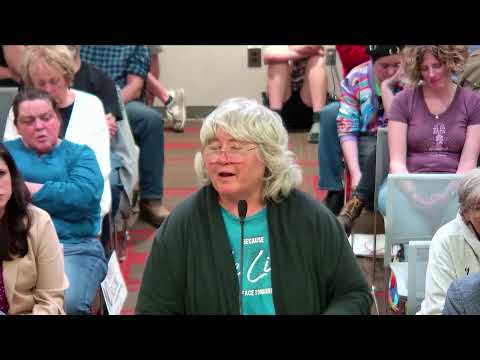
Opponents filled the public‑comment period to object. Residents said many landowners were offered purchase prices far above typical farmland value, raising charges of coercion or undue pressure; they warned of lost agricultural heritage, long‑term groundwater and health risks near existing contaminated sites, unclear fiscal impacts from potential tax abatements, and a lack of a named end user to evaluate environmental and traffic effects. “We don’t know what could go in there,” said Emily McMillan, a nearby resident. “Until you know the potential harm, why wouldn’t you table it?”
Other speakers asked the council to require more plan consistency checks with county and city comprehensive plans, to investigate perceived conflicts of interest tied to the Indiana Economic Development Corporation’s property holdings and to secure enforceable local hiring and environmental protections. The mayor, union representatives and some business advocates countered that failing to create available industrial land would mean missing future large projects and the jobs and peripheral economic activity they can bring.
Council discussion acknowledged the tension between economic development and resident concerns. After the public hearings the council took separate roll‑call votes on the annexation (Ordinance 7229) and the rezoning (Ordinance 7234). Both measures passed 8–1; Councilman Stevenson recorded the lone Nay on both votes.
Because these were first‑reading actions, proponents said additional approvals, environmental reviews, subdivision and site‑plan hearings and public meetings would be required before any building or ground‑disturbing work could begin. Petitioners reiterated that annexation and rezoning create the opportunity to vet and negotiate specific projects rather than guarantee a particular facility.
The council set the second readings for March 23, when both items will come back for potential final action.