Get Full Government Meeting Transcripts, Videos, & Alerts Forever!
Get email alerts on the Water Infrastructure topic
No spam. Unsubscribe anytime.
Committee hears $13M OWDA nomination and $500,000 grant for lead service‑line work
Summary
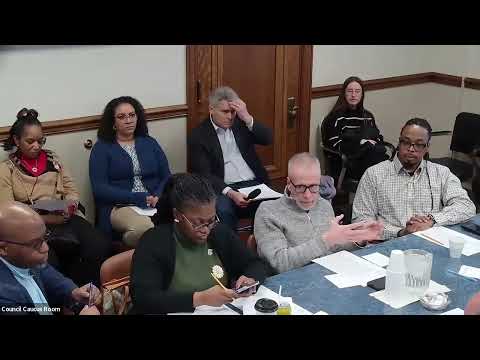
City staff asked the Finance Committee to nominate water projects for an Ohio Water Development Authority loan application (up to $13 million) and to accept and appropriate a $500,000 lead‑service‑line grant; staff warned of a state policy change requiring communities to pay contractors up front and seek reimbursement.
City water and finance staff told the Finance Committee they plan to nominate a package of water‑system projects for Ohio Water Development Authority (OWDA) funding — an application not to exceed $13 million — that would include continued replacement of lead service lines.
Harry (water department staff) said the OWDA request is an application step to keep projects in the state pipeline. "This is just the application," one council member observed; staff confirmed nomination does not commit the city to repayment terms until a project is selected and financing terms are finalized.
The committee also reviewed a $500,000 grant to pay for labor and copper to replace household lead service lines; administration said item 15 accepts the grant and item 17 appropriates the funds into the water department budget. "These proceeds pay for the man hours and the copper that we need to purchase to replace the lead service lines," staff said.
Staff explained the city identified likely lead lines using resident surveys and data gathered during meter changeouts and said the replacement work will go out to bid. Council members asked for better interdepartmental coordination to avoid digging up streets recently repaired by other capital projects.
Separately, staff warned of a statewide policy change affecting large projects: the state now requires municipalities to pay vendors up front and then request reimbursement, rather than the state paying vendors during construction. "We are no longer going to have the state paying vendors on our behalf; we are now going to have to pay the vendors up front and then on a timely manner request reimbursement," a finance official told the committee. Staff said that shift will raise near‑term appropriations the council will see for wastewater and combined‑sewer projects and may increase short‑term borrowing or budgetary commitments while awaiting reimbursement.